

Main website:
Other company websites:
Choose website




Stadium and Arena Security: Fast Bag Screening for Peak Arrival Waves
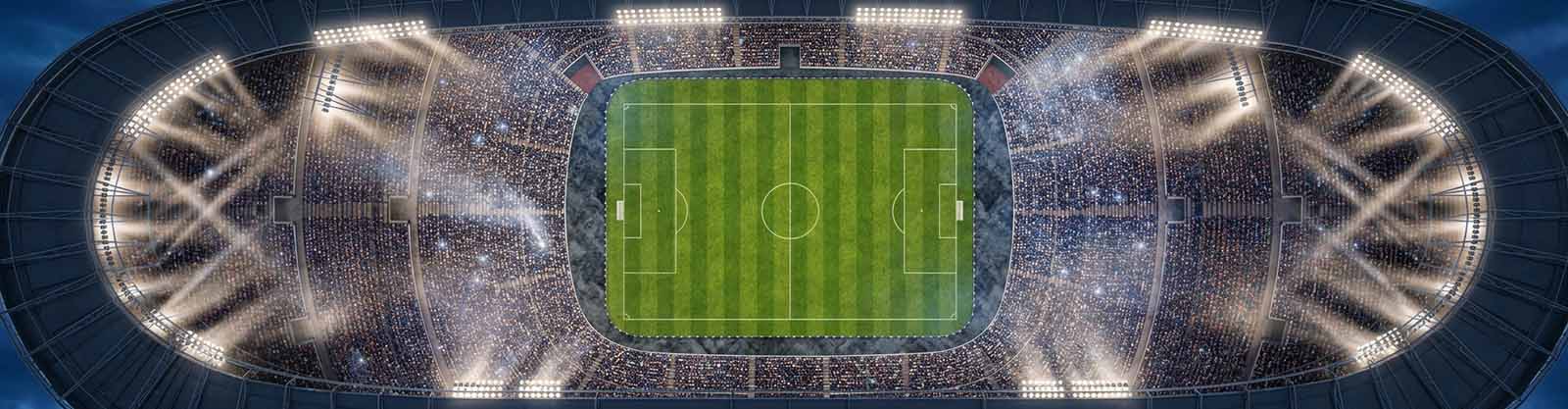


Stadium and Arena Security: Fast Bag Screening for Peak Arrival Waves
FOCUS: High-throughput bag screening for stadiums and arenas
APPLICATION: Match days, concerts, live events and peak arrival waves
SOLUTION: LV STREAM AI-powered high-footfall bag screening
CONTACT: ukinfo@linevsystems.com
Introduction
Stadiums and arenas face one of the hardest entrance security challenges in the public venue sector. Thousands of people can arrive within a short window before kick-off, showtime or doors closing. They arrive with bags, coats, personal items and different expectations of how quickly they should move through the entrance.
For security teams, this creates a narrow operational window: screen effectively, keep people moving and avoid creating a crowd outside the gates.
Why Stadium Arrivals Are Different
The arrival pattern at a stadium or arena is not evenly spread across the day. It comes in waves. A quiet entrance can become a high-pressure environment within minutes, especially when public transport, weather, ticket scanning and crowd behaviour all converge.
Manual bag searches struggle in this environment because they depend on individual staff speed and consistency. Traditional X-ray lanes can also become slow when every image requires manual interpretation. The result is familiar: queues grow, staff become reactive and the visitor experience begins with frustration.
Security Must Match the Rhythm of the Event
A stadium security system must work in the rhythm of the event. It needs to support fast fan entry, effective prohibited items detection and clear escalation when a suspicious bag is identified. It must also integrate with wider systems such as walk-through metal detectors, ticket gates, access control, CCTV, stewards and command teams.
This is where stadium bag screening becomes especially valuable. It allows the venue to apply stronger checks at the entrance while still respecting the pace required by live events.
LV STREAM for Stadiums and Arenas
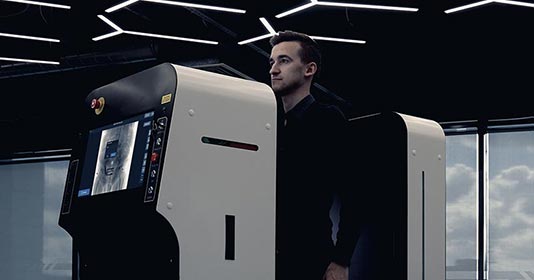
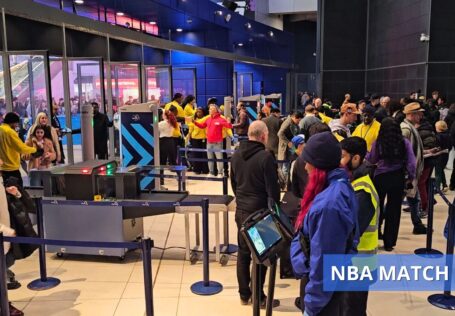
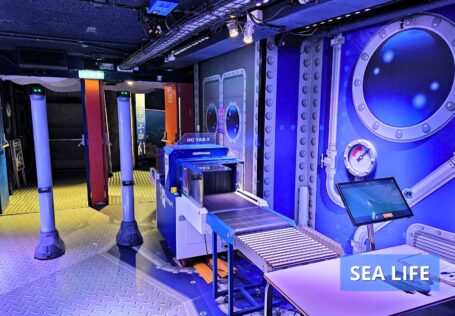
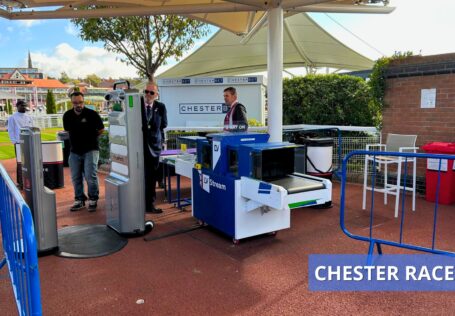
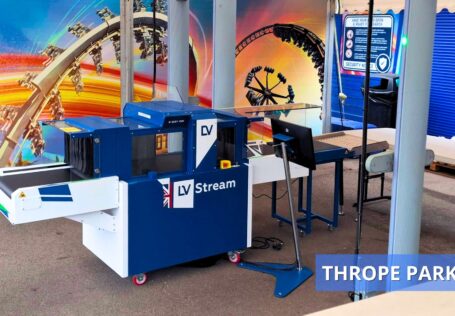
LV STREAM is designed for high-footfall environments such as stadiums, arenas and live event venues. Its dual-view X-ray technology and A-EYE-powered automatic threat detection help classify bags in real time, reducing the need for continuous manual image review. With throughput of up to 1,400 bags per hour, the system supports continuous bag flow aligned with visitor movement.
For stadiums and arenas, the practical advantage is clear: security teams can focus on flagged items and crowd management instead of asking every visitor to wait while a manual search is completed.
Evidence from The O2 and Live Venues
The O2 Arena case study is particularly relevant because it reflects real-world high-footfall conditions. Over a six-month evaluation period, LV STREAM was deployed across live events at major UK venues. The results included faster entry, reduced manual searches, fewer entrance queues and greater staff availability for wider security duties.
For arenas, this matters because entrance delays do not only create inconvenience. They can affect safety, customer satisfaction, staffing costs and the commercial performance of the venue. A fan who spends less time queuing outside has more time to move safely inside, access amenities and settle before the event begins.
A Better Experience for Fans and Staff
Modern stadium security should feel professional, clear and proportionate. Fans expect visible security, but they do not want entry to feel chaotic or unpredictable. Staff need tools that help them make consistent decisions under pressure.
LV STREAM supports both sides of that equation. Visitors move through a faster screening process, while security personnel receive automatic assistance in identifying potential threats. The result is not less security; it is a more consistent and scalable security workflow.
Conclusion
Match days and concerts do not give security teams much time. The most intense security challenge is often concentrated into the short period before the event begins.
By combining high-throughput bag screening, A-EYE-supported automatic threat detection and integration with existing entrance infrastructure, LV STREAM gives stadiums and arenas a practical way to strengthen security without slowing the crowd. For venues preparing for a more demanding public protection environment, that combination is becoming increasingly important.
Related news

Before the Entrance: Why Crowd Build-Up Must Be Part of Venue Security
Crowd build-up outside venues is not just an operational issue. It can become a security risk. Here is why high-throughput bag screening should be part of modern entrance planning.

LV STREAM Wins Market Disruptor of the Year 2026
LV STREAM has been named Market Disruptor of the Year 2026, marking its sixth award in the past year and reinforcing its role in transforming high-footfall bag screening with faster, more efficient and less intrusive security.