

Main website:
Other company websites:
Choose website




Before the Entrance: Why Crowd Build-Up Must Be Part of Venue Security


Before the Entrance: Why Crowd Build-Up Must Be Part of Venue Security
FOCUS: Crowd build-up and entrance security planning
APPLICATION: Public venues, arenas, schools, museums, events and high-footfall sites
SOLUTION: LV STREAM high-throughput AI-powered bag screening
CONTACT: ukinfo@linevsystems.com
Introduction
For many venues, venue entrance security begins at the entrance. In reality, the risk may begin before the entrance. When thousands of people arrive at the same time and screening is too slow, a protective checkpoint can unintentionally create a dense crowd outside the secure area. That crowd may be exposed, difficult to manage and harder for staff to protect.
This is why modern venue entrance security must treat crowd build-up as part of the security plan, not just a customer service issue.
The Bottleneck Problem
Traditional bag checks often work acceptably when visitor numbers are low. The problem appears when arrivals concentrate into short windows: before a concert, before a match, during school start times, at the opening of a major exhibition or ahead of a high-profile event. Manual checks become inconsistent, staff become stretched and visitors begin to queue.
Once a queue forms, the venue has two problems at once. First, the screening process is not keeping up with demand. Second, a large number of people are gathered in a space that may sit outside the controlled perimeter. This is not simply inefficient. It can change the risk profile of the entrance.
Why Speed Must Be Part of Security
Security technology is often judged by detection capability alone. Detection matters, but in high-footfall environments speed is also a safety factor. A system that detects well but slows people down can create pressure elsewhere. A system that moves people quickly but lacks effective threat detection is equally unsuitable.
The goal is balance: strong screening, consistent decisions and enough throughput to prevent crowd build-up. This is why high-throughput bag screening is becoming central to public venue security planning. It allows venues to apply stronger checks without forcing visitors into long waiting lines.
Lessons from Real Public Venue Deployment
The LV STREAM public venue case study shows this challenge clearly. During a six-month evaluation across major UK venues including The O2 Arena, the Natural History Museum, the Sea Life Centre London and Chester Racecourse, hundreds of thousands of bags were screened under real conditions. Reported results included reduced manual searches, faster visitor entry and the elimination of queues at entrances.
One of the strongest lessons from the case is that entrance flow is part of protective security. As the customer feedback states: “Queues aren’t just inconvenient; they’re unsafe.” That is a powerful point for security managers because it reframes throughput as a risk-reduction measure, not merely an operational convenience.
How LV STREAM Helps
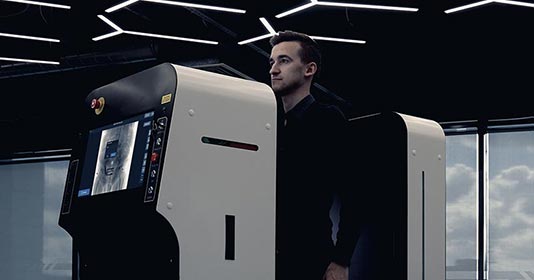
LV STREAM was developed for high-footfall environments where bags need to move in sync with visitor movement. The system screens up to 1,400 bags per hour and uses A-EYE-powered automatic threat detection to support rapid, consistent decisions. Security staff do not need to interpret every image manually; they can focus on flagged items, visitor management and wider situational awareness.
This does not remove the need for trained staff or clear procedures. It helps those procedures work at the pace of the crowd.
What Venues Should Review
A practical entrance security review should look at expected arrival peaks, queue length, available space before the entrance, bag policy, prohibited items, communication before arrival and the ability of staff to escalate without blocking the flow. It should also ask whether current screening methods can cope with the worst 30 minutes of the day, not just the average hour.
For high-footfall venues, the worst 30 minutes often define the visitor experience and the security risk.
Conclusion
Crowd build-up outside a venue is not just a sign of slow operations. It can become a security concern in its own right. As UK venues review protective security and prepare for Martyn’s Law, the entrance must be considered as a dynamic environment where screening, flow and crowd safety are connected.
LV STREAM addresses that connection directly: faster bag screening, consistent A-EYE-supported detection and a smoother route from public space into the protected venue environment.
Martyn's Law Solution

LV STREAM Wins Market Disruptor of the Year 2026
LV STREAM has been named Market Disruptor of the Year 2026, marking its sixth award in the past year and reinforcing its role in transforming high-footfall bag screening with faster, more efficient and less intrusive security.