

Main website:
Other company websites:
Choose website




Martyn’s Law and the Reality of Venue Bag Screening



Martyn’s Law and the Reality of Venue Bag Screening
FOCUS: Practical bag screening procedures for public venues
APPLICATION: Public venues, events, schools, museums, arenas and high-footfall sites
SOLUTION: LV STREAM high-footfall AI-powered bag screening
CONTACT: ukinfo@linevsystems.com
Introduction
Venue bag screening is becoming an increasingly important part of public protection planning as Martyn’s Law changes the way many UK organisations think about public venue security. For venue owners, event operators and security managers, the challenge is not only to understand the Terrorism (Protection of Premises) Act 2025, but to turn the guidance into practical measures that work at busy entrances every day.
That matters because protective security is not a document exercise. It becomes real at the point where visitors arrive, staff make decisions, bags are checked, prohibited items policies are applied and crowds either keep moving safely or begin to build up outside the entrance.
From Legal Awareness to Operational Readiness
The Home Office statutory guidance explains the core concepts of the Act and helps those responsible for premises and events understand whether they are in scope and how to comply with duties. For larger premises and events, the public conversation has already moved towards practical questions: What should staff do? Which entrances need controls? When should bag checks be used? How should queues be managed? What happens if a suspicious item is identified?
This is where many venues need a more practical approach. Awareness of Martyn’s Law is only the first step. The next step is building public protection procedures that can be understood, trained, tested and repeated by the people on the ground.
Understanding the Two Tiers of Martyn’s Law
The Terrorism (Protection of Premises) Act 2025 establishes a tiered approach to protective security, and the tier a venue falls into shapes what is expected of those responsible for it.
Standard tier premises are those where 200 to 799 individuals can reasonably be expected to be present at the same time. Enhanced tier premises are those where that figure reaches 800 or more. Qualifying events — concerts, sporting fixtures, festivals and similar — are always treated as enhanced tier where they meet the capacity threshold and involve controlled access such as ticketing or payment.
This distinction matters for bag screening planning. Standard tier premises must put public protection procedures in place: evacuation, invacuation, lockdown and communication. Enhanced tier premises and qualifying events must go further, putting in place public protection measures as well. These cover monitoring, movement, physical safety and security. Bag screening sits within the physical safety and security category.
For venues operating at enhanced tier capacity, the question of how bags are screened at the entrance is not a peripheral concern. It is a core part of what the Act’s guidance describes as reducing the vulnerability of premises to acts of terrorism.
What Enhanced Tier Means for Entrance Procedures
At enhanced tier scale, entrance management carries additional operational weight. With 800 or more individuals expected on site, the time it takes to screen each arrival has a direct effect on crowd build-up outside the venue perimeter. A slow or inconsistent screening process does not only create inconvenience. It creates a secondary risk at the point where people are most concentrated and least protected.
LV STREAM was designed for this environment. Its throughput of up to 1,400 bags per hour supports the kind of continuous, policy-led screening that enhanced tier venues need to maintain visitor flow without creating new vulnerabilities at the entrance.
Why Bag Screening Procedures Matter
Bag screening is one of the most visible parts of public protection. It is also one of the most sensitive. If it is too slow, it creates bottlenecks. If it is inconsistent, it may miss prohibited items. If it depends heavily on manual searches, the process can vary between staff members, especially during peak arrivals.
A strong venue bag screening procedure should define what is being searched, which items are prohibited, when screening is applied, who responds to an alarm and how visitors are moved away from the entrance if escalation is required. It should also consider accessibility, communication and staff training.
The aim is not to create a heavy or intimidating experience. The aim is to make security visible enough to deter, consistent enough to support staff and fast enough to avoid creating a new crowd risk.
Public Protection Measures: Where Bag Screening Fits
The Act’s guidance distinguishes between public protection procedures — the four actions of evacuation, invacuation, lockdown and communication — and public protection measures, which apply to enhanced tier premises and qualifying events.
Public protection measures cover monitoring, movement, physical safety and security, and security of information. Bag screening at the entrance is a physical safety and security measure. It serves two of the Act’s stated objectives: reducing the risk of physical harm to individuals and reducing the vulnerability of the premises or event to acts of terrorism.
Understanding this distinction helps venues frame their screening decisions in the right context. Bag screening is not a standalone compliance exercise. It is one component of a wider set of physical security measures that, taken together, address the vulnerability the Act is designed to reduce.
When reviewing public protection measures as part of wider Martyn’s Law preparation, venues should consider how bag screening connects to the other elements already in place: CCTV coverage at the entrance, communication procedures for staff when a bag is flagged, access control systems, and the escalation process that links the screening point to command teams and wider incident response.
LV STREAM produces a record of each screening event, which supports the documentation requirements that responsible persons at enhanced tier premises will need to maintain. A consistent, technology-supported screening process is easier to document, review and update than one that relies primarily on manual judgment.
Bag Screening Across Venue Types in Scope
The Act applies across a wide range of premises and events listed in Schedule 1. Many of those venue types present specific entrance screening challenges that a general approach does not address well. The following sections cover the venue categories most relevant to high-footfall bag screening.
Stadiums and Arenas
Stadiums and arenas are among the most operationally complex environments for bag screening. Arrivals are compressed into a short window before kick-off or curtain-up, exit queues reverse the pressure at the end, and staffing levels vary significantly between a sold-out fixture and a midweek event with lower attendance.
For match day and event day security screening, the core challenge is throughput consistency. Manual bag searches can vary between staff members, slow down under peak pressure and create the kind of queuing outside the entrance that any entrance security procedure is intended to avoid.
A defined bag screening procedure supported by high-throughput X-ray imaging gives security teams a repeatable, auditable process that does not depend on individual staff decisions at each bag. When a bag is flagged, staff respond to a specific alert rather than making an unassisted judgment call on every item that passes through.
Concert and Live Event Venues
Concerts and live events that involve ticketing or payment and reach the 800-person threshold will be qualifying events under the Act, regardless of whether the venue itself is in scope. This means that a venue which sits below the enhanced tier threshold in its day-to-day use may still be subject to enhanced tier requirements when it hosts a qualifying event.
For event promoters and venue operators, this creates a practical question: does the screening capability available at the entrance match the requirements of the event being held? A venue that manages well with manual checks at lower-capacity events may find that the same approach is not workable when capacity increases and arrival patterns change.
Planning bag screening as part of event security — rather than retrofitting a process on the day — is where the guidance encourages venues to focus attention during the implementation period.
Museums, Galleries and Visitor Attractions
Museums, libraries, galleries and visitor attractions are listed in Schedule 1 to the Act. For many, the audience includes families, tourists and school groups alongside individual visitors, which creates specific expectations around the screening experience.
Visitor-friendly security screening is not a lower standard of security. It is a recognition that the way screening is conducted affects whether visitors feel deterred, welcomed or inconvenienced, and that a process which creates significant delays or requires intrusive manual searches may affect visitor numbers over time.
The aim for cultural and heritage venues is to make screening visible enough to act as a deterrent and consistent enough to be effective, while keeping the entrance experience proportionate to the setting. High-throughput X-ray bag screening supports this by reducing the time each visitor spends at the screening point and limiting the need for secondary manual searches.
Shopping Centres and Retail Destinations
Shopping centres present a different set of operational conditions. Footfall is spread across longer opening hours, there are typically multiple entrances, and the visitor population includes regular daily shoppers alongside high-footfall periods during sales, events and peak retail seasons.
For shopping centre security screening, the challenge is consistency across entrances and across different times of day. A screening procedure that works well at a single main entrance during peak hours needs to be transferable to other access points and manageable during quieter periods with reduced staffing.
Bag screening for shopping centres also needs to account for the volume of items visitors carry as a matter of course — bags of shopping, pushchairs, delivery items and so on — which makes a process that moves quickly through routine bags while flagging items of concern more effective than one that treats every bag as requiring the same level of attention.
Transport Hubs and Public Transit Facilities
Bus stations and railway premises are included in Schedule 1 to the Act, though some transport premises already subject to existing security legislation are excluded from scope. For those that do fall within the Act’s requirements, the screening context is distinct from a venue with controlled access.
Transport hubs see continuous, unpredictable footfall rather than event-driven peaks. Passengers arrive and depart across the full operating day, often with large amounts of luggage, and the time available to conduct any screening is limited by the nature of the journey they are making.
For urban transit security and bus terminal bag screening, the practical question is whether a screening process can operate at the pace the environment demands without creating the kind of queuing that affects service access and generates its own crowd management challenges. The throughput characteristics of LV STREAM are relevant here for the same reasons they apply at stadiums and arenas: the system is designed to keep people moving, not to stop them.
Where LV STREAM Fits
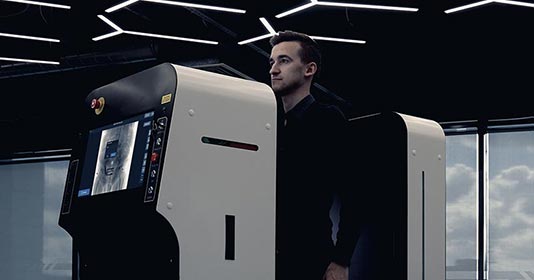
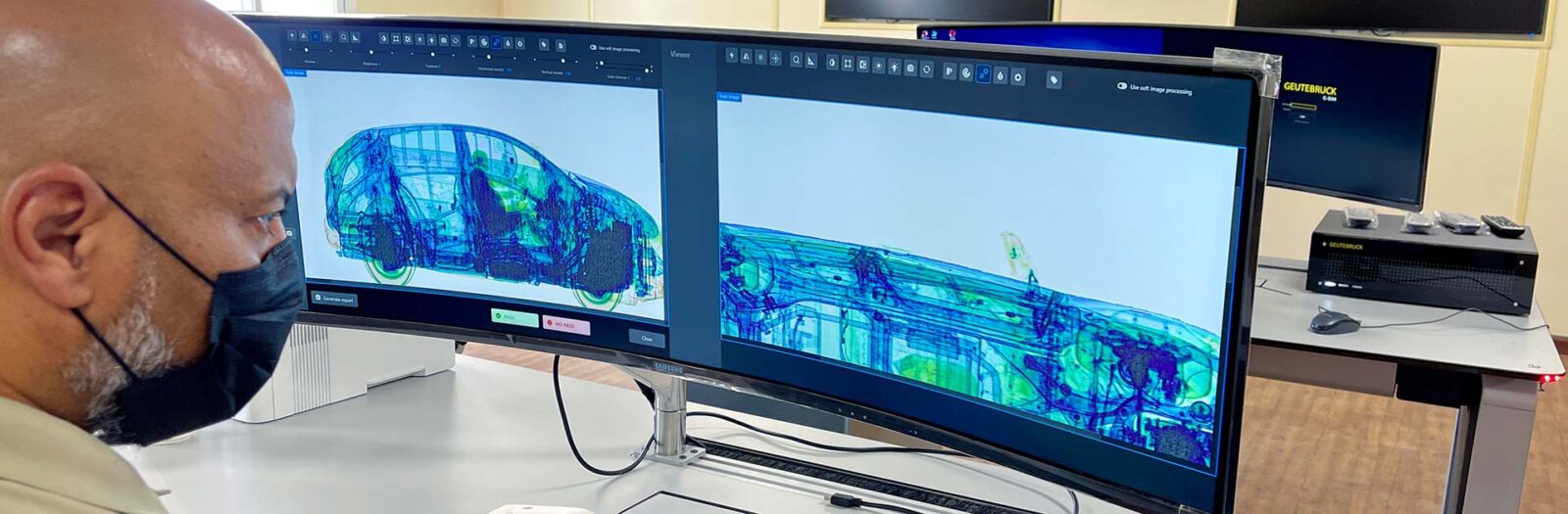
LV STREAM is relevant because it was designed for high-footfall bag screening rather than slow, stop-start inspection. The system combines dual-view X-ray imaging with A-EYE-powered automatic threat detection, helping security teams classify bags quickly and act only when a potential threat is flagged.
With throughput of up to 1,400 bags per hour, LV STREAM supports a more fluid screening process at entrances where visitor movement cannot be allowed to collapse into long queues.
For Martyn’s Law messaging, the wording should remain precise: LV STREAM does not make a venue compliant by itself, and no single product replaces risk assessment, procedures or trained staff. Instead, LV STREAM can support venues preparing for Martyn’s Law by enabling fast, policy-led venue bag screening as part of wider public protection procedures.
A Practical Checklist for Venues
When reviewing bag screening in light of Martyn’s Law, venues should ask practical questions:
- Which entrances are most exposed to crowd build-up?
- Which items are prohibited and how is this communicated before arrival?
- Can staff screen bags quickly enough during peak periods?
- What is the escalation process when a suspicious bag is flagged?
- How does screening connect with CCTV, access control, stewards, command teams and wider incident response?
These questions help move the discussion away from abstract compliance and towards operational readiness. The best security measures are not only strong on paper; they are usable under pressure.
Preparing for Martyn’s Law: The Implementation Window
The Act received Royal Assent in April 2025. The government has confirmed an implementation period of at least 24 months before the requirements come into force, meaning venues have time to plan, test and embed their protective security procedures before enforcement begins.
The statutory guidance issued under section 27 of the Act is available now and is intended to support that preparation. The Security Industry Authority will act as the regulator once the Act commences and will publish its own guidance on how compliance will be assessed.
The implementation period is the right time to review entrance procedures, identify gaps in screening capability and put in place the training and documentation that the Act will require. Waiting until the requirements are enforceable reduces the time available to build procedures that work reliably under operational pressure.
For venues considering bag screening equipment as part of their preparation, the relevant question is not whether a product makes a venue compliant — no product does that in isolation — but whether it supports a screening procedure that is fast enough to avoid crowd build-up, consistent enough to support staff, and connected to the wider public protection framework the Act requires.
Conclusion
Martyn’s Law should encourage venues to build protective security into everyday operations. For busy public places, that means thinking carefully about bag screening, staff workload, visitor movement and crowd safety before the entrance.
LV STREAM gives security teams a practical way to increase the speed and consistency of venue bag screening while keeping visitor flow at the centre of the process. In the current UK security environment, that balance is no longer optional. It is part of responsible public venue planning.
LV STREAM Wins

LV STREAM Wins Market Disruptor of the Year 2026
LV STREAM has been named Market Disruptor of the Year 2026, marking its sixth award in the past year and reinforcing its role in transforming high-footfall bag screening with faster, more efficient and less intrusive security.

Next-Gen Event Security: LV STREAM at NBA London Game 2026
At the NBA London Game 2026, LV STREAM and other screening technologies from LINEV Systems UK ensured smooth and secure entry, supporting high-footfall bag screening for thousands of fans.