

Main website:
Other company websites:
Choose website




Museum, Cathedral and Visitor Attraction Security: Practical Martyn’s Law Solutions Without Disrupting the Visitor Experience



Museum, Cathedral and Visitor Attraction Security: Practical Martyn’s Law Solutions Without Disrupting the Visitor Experience
Museums, cathedrals and visitor attractions need security that protects people without damaging the visitor experience. Fast, practical bag screening is becoming an important part of Martyn’s Law preparation.
Museum, Cathedral and Visitor Attraction Security: Practical Martyn’s Law Solutions
FOCUS: Visitor-friendly security for museums, cathedrals and cultural venues
APPLICATION: High-footfall public attractions and heritage environments
SOLUTION: LV STREAM AI-powered bag screening for public protection procedures
CONTACT: ukinfo@linevsystems.com
Introduction
Martyn’s Law solutions for museums, cathedrals and visitor attractions need to protect people, staff and heritage assets without damaging the visitor experience. These venues are often busy, open and symbolic. They welcome families, tourists, school groups, VIP guests and international visitors, while preserving a calm and accessible environment.
That balance is difficult. Too little screening can leave a venue exposed. Too much friction at the entrance can make the venue feel closed, stressful or unwelcoming.
The Visitor Experience Begins Before the First Exhibit
For cultural venues, the entrance is part of the experience. A slow or confusing bag check can shape the visitor’s first impression before they have seen the building, exhibition or collection. Long queues can also be problematic when visitors include children, elderly guests, tourists with luggage, school groups or people with accessibility needs.
Security must therefore be strong, but it must also feel calm and well managed. The best systems support a sense of confidence rather than disruption.
Why Cultural Venues Need a Different Screening Model
Many museums and attractions operate with changing visitor volumes. A quiet weekday morning can be followed by a peak school arrival, a private event, a public holiday rush or an exhibition opening. Cathedrals and heritage sites may also receive sudden increases in attendance for services, ceremonies and tourism peaks.
This makes flexibility important. A screening approach for cultural venues should support both ordinary daily visitor flow and larger surges without demanding a large number of specialist operators.
LV STREAM in Cultural and Heritage Environments
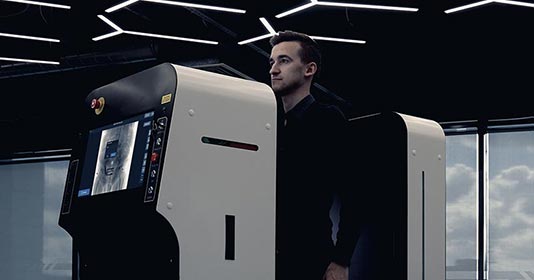
LV STREAM is well suited to this challenge because it was designed for high-footfall public environments, including museums and cultural venues. It combines dual-view X-ray imaging with A-EYE-powered automatic threat detection, helping staff identify potential threats while reducing the need for time-consuming manual image interpretation.
The system’s throughput of up to 1,400 bags per hour helps maintain movement through the entrance, while its compact and modular design supports integration with existing security layouts. This is particularly useful in heritage environments where major reconstruction may be undesirable or difficult.
From Martyn’s Law Solutions to Practical Implementation
Search terms such as Martyn’s Law solutions, Martyn’s Law device and ready-made solutions for Martyn’s Law usually point to the same underlying need: venues want something practical, understandable and deployable.
For cultural venues, the stronger message is not that one device solves the law. It is that a high-throughput bag screening system can support the procedures, staff workflows and prohibited-items policies that public protection planning requires.
Evidence from Public Venue Case Studies
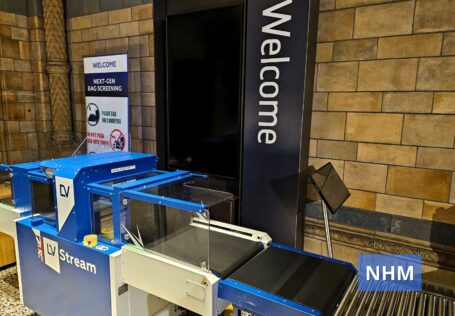
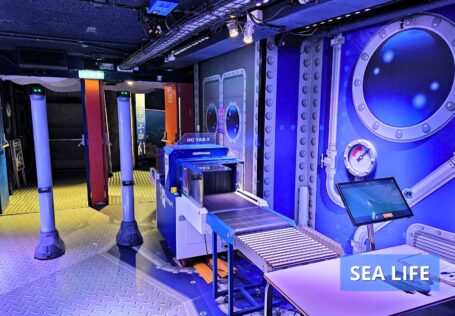
The public venues case study includes deployments and evaluations connected with the Natural History Museum and the Sea Life Centre London, where the value extended beyond security alone. Faster entry meant less time outside, smoother visitor movement and more time inside the venue.
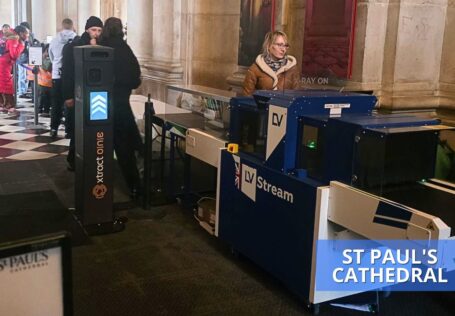
St Paul’s Cathedral is another important example for cultural venue messaging. LINEV Systems UK reports that LV STREAM helped support changing visitor volumes, including large crowds of up to 2,000 visitors processed in under 60 minutes. For heritage venues, that demonstrates the value of screening that can scale with demand while supporting a more welcoming experience.
A More Proportionate Approach to Public Protection
Martyn’s Law and the wider UK public protection conversation are encouraging venues to think more carefully about preparedness. Many organisations are now searching for Martyn’s Law solutions, a Martyn’s Law device or ready-to-deploy ways to strengthen public protection.
For museums and visitor attractions, the answer should not be a heavy-handed entrance that feels severe or uninviting. It should be a proportionate screening process that fits naturally into the visitor journey.
A clear prohibited items policy, trained staff, visitor communication and fast bag screening can all work together. LV STREAM can form part of practical Martyn’s Law solutions for cultural venues by making bag screening faster, more consistent and easier for staff to manage. It should be positioned as part of a wider public protection approach rather than as a single standalone compliance device.
Conclusion
Cultural venues need security that protects people, staff and heritage assets without overwhelming the visitor experience. They need practical systems that can cope with daily tourism, school groups, special events and peak visitor periods.
LV STREAM provides a route to stronger, faster and more visitor-friendly bag screening. For museums, cathedrals and attractions looking for practical solutions for Martyn’s Law, or evaluating whether a Martyn’s Law device could support their security procedures, that combination is highly relevant.
The key is to use technology as part of a clear, policy-led security process rather than as a one-size-fits-all claim of compliance.
Related news
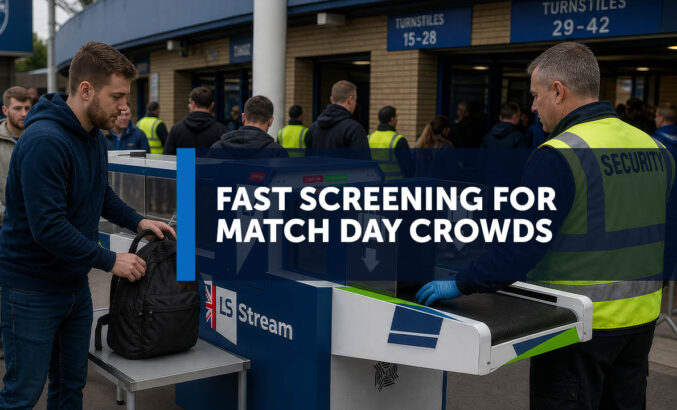
Stadium and Arena Security: Fast Bag Screening for Peak Arrival Waves
Stadiums and arenas face intense arrival peaks before matches, concerts and live events. Fast, AI-supported bag screening helps venues strengthen protection while keeping fans moving.

LV STREAM Wins Market Disruptor of the Year 2026
LV STREAM has been named Market Disruptor of the Year 2026, marking its sixth award in the past year and reinforcing its role in transforming high-footfall bag screening with faster, more efficient and less intrusive security.