

Main website:
Other company websites:
Choose website




Martyn’s Law Qualifying Events: How to Plan Entry and Bag Screening for Festivals, Concerts and Outdoor Events


09 November 2026
Martyn’s Law Qualifying Events: How to Plan Entry and Bag Screening for Festivals, Concerts and Outdoor Events
Festivals, concerts and outdoor events with ticketed entry and 800 or more people on site will fall under Martyn’s Law as qualifying events. Here is how to plan entry and bag screening that keeps crowds moving.
A festival, concert or outdoor event becomes a Martyn’s Law qualifying event when it is open to the public, checks tickets, wristbands or payment on entry, and can reasonably expect 800 or more people on site at the same time. The organiser in control of the site then carries enhanced duties under the Terrorism (Protection of Premises) Act 2025, including measures covering how people enter the event and how the site is secured. Entry and bag screening sits within those measures, so it has to be planned as part of event design rather than improvised at the gate.
This article explains how the qualifying event test applies to festivals, concerts and outdoor events, and how to plan screening that is proportionate and fast enough to prevent crowd build-up. For screening at permanent venues, see Martyn’s Law and the Reality of Venue Bag Screening1.
What is a qualifying event under Martyn’s Law?
A qualifying event is defined in section 3 of the Terrorism (Protection of Premises) Act 20252. The Home Office scope (events) factsheet3 sets out six criteria, and an event must meet all of them.
| Criterion | What it means for events |
| Held at premises | A building, land or both. Open land with no building counts, so a festival field or park can host a qualifying event. |
| Not at enhanced tier premises | An event at a venue that is already enhanced tier, such as a large stadium, is covered by the venue’s own duties. |
| Open to the public | The public must be eligible to attend, even if tickets sell out. Weddings and staff-only events are excluded. |
| 800 or more at the same time | Including staff, at any point during the event. The figure does not need to be sustained. |
| Entry controls in place | Attendees are checked for payment, a ticket or pass, or club membership. Free events with wristband or QR checks are included. |
| Not excluded | Events at premises excluded by Schedule 2, and at places of worship, childcare settings, schools and further education premises, are out of scope. |
Two points catch organisers out. The 800 figure is a peak, not an average: the Home Office example is a day festival with about 500 people until 6pm and 1,000 or more in the evening, which qualifies. And the entry control criterion is narrow: tickets, wristbands, QR codes and turnstiles count, but a dress code, a search requirement or a suggested donation does not.
A venue that is normally standard tier (200 to 799 people) can also host a show above 800. Depending on the circumstances, that show is either a qualifying event or draws the venue into the enhanced tier. Either way, enhanced duties apply while the larger crowd is present.
Martyn’s Law outdoor events: perimeters and open areas
An outdoor event creates its own premises. A field, park, racecourse infield or closed square counts as premises once an organiser takes control of it and checks entry. The Home Office says entry controls only count where the event has a well-defined, secure perimeter3, so the fence and gates that make an event qualify are the same places where screening happens.
Where an event mixes open streets with fenced, ticketed areas, the Act applies separately to each controlled area that expects 800 or more people at once. Open roads, pavements and towpaths are out of scope unless they are in the immediate vicinity of a qualifying event3. That vicinity matters: section 6 of the Act2 covers harm in the immediate vicinity of the event, so queues, drop-off points and approach routes outside the fence are part of the screening plan.
Festivals
Where a campsite and an arena each have their own entry checks, they are assessed as separate areas. Arrival day brings tents, rucksacks and trolleys through the campsite gates over many hours, while arena re-entry brings a steady flow of small bags all weekend. Most festivals therefore need a slower search regime for camping kit and a faster one for day bags, with lane numbers set separately for each.
Concerts
For outdoor shows in parks, country estates and racecourses, the promoter that takes control of the site is usually the responsible person, not the landowner. Arrival is typically compressed into the last hour or so before the headline act, so lane capacity is sized for that window. If the concert is held at enhanced tier premises such as a large stadium, it is not a separate qualifying event: the venue’s duties cover it, and promoter and operator should agree in writing who does what.
City festivals, fan zones and mass-participation events
Carnivals, Christmas markets, fan zones and marathons often combine open areas with ticketed enclosures such as main stages, hospitality areas or grandstands. Screening is concentrated at the enclosure gates, but the open-access crowd around them, often larger than the audience inside, has to be factored into queue and approach planning.
Who is responsible and what the Act requires
The responsible person for a qualifying event is whoever controls the premises in connection with the event. Tasks can be contracted to security and screening providers, but legal responsibility cannot.On top of the public protection procedures required for all premises and events in scope (evacuation, invacuation, lockdown and communication, under section 5 of the Act2), the responsible person must:
- put in place public protection measures so far as reasonably practicable (section 6), covering monitoring, the movement of people into, out of and within the event, physical safety and security, and the security of information;
- document those procedures and measures, with an assessment of how they reduce risk, and provide the document to the SIA (section 7);
- designate a senior individual where the responsible person is an organisation (section 10).
The Security Industry Authority (SIA) regulates the regime. For a qualifying event, the maximum penalty is £18 million or 5% of qualifying worldwide revenue, whichever is greater, under section 18 of the Act2. The duties are not yet in force. Commencement is expected in spring 2027 but the date has not been confirmed, so the 2027 outdoor season is likely to be the first one affected.
Where entry and bag screening fits
The Act does not require bag searches or X-ray screening at any event. It requires the responsible person to decide which measures are appropriate and to put them in place so far as reasonably practicable. Entry screening is one of the most direct ways to meet two of the section 6(3) categories: the movement of people into the event and the physical security of the site.
“Reasonably practicable” means weighing risk reduction against time and cost. Measures for a 900-person food festival can look very different from those at a 40,000-capacity weekend festival, provided the choice is assessed and recorded. The Home Office states that neither it nor the SIA endorses third-party products, so equipment supports compliance only through the procedures, staff and documentation built around it.
Within that range, X-ray screening is an option rather than an obligation. At a smaller event with a short arrival window, a visible manual search backed by a clear bag policy may be proportionate. As attendance and arrival peaks grow, manual searching becomes harder to sustain: each check takes longer, the result depends on the individual searcher, and queues build outside the perimeter, where people are least protected.
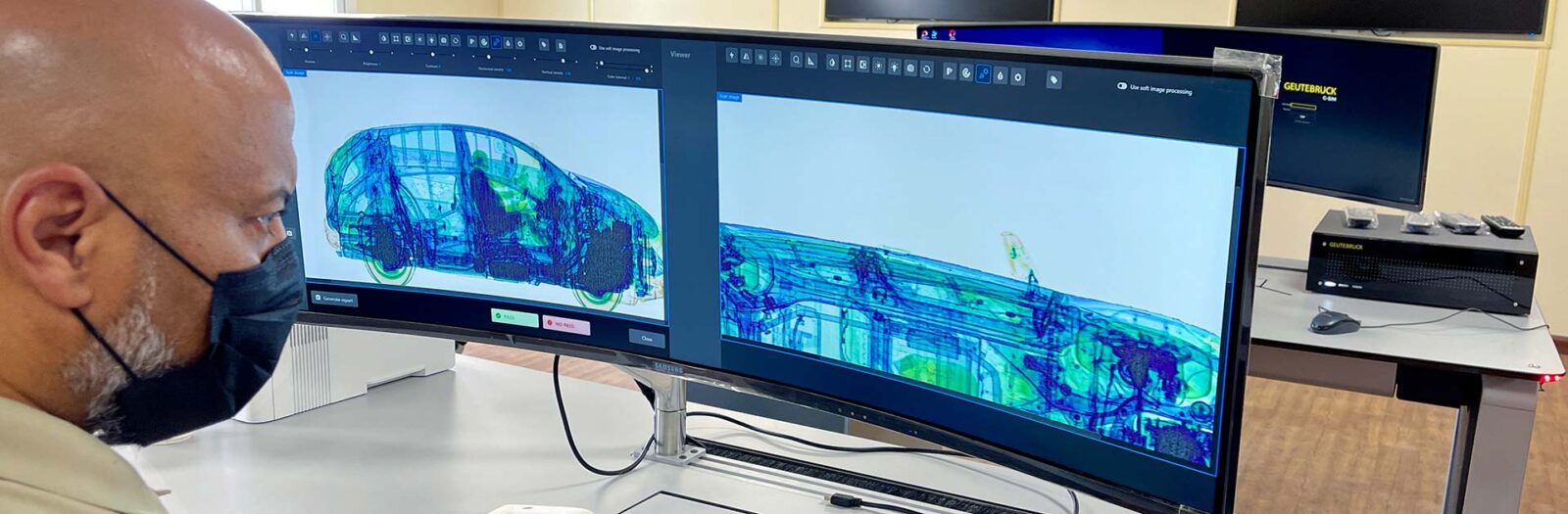
X-ray screening addresses those weaknesses by showing the contents of every bag without opening it, including dense objects and concealed compartments that a quick visual check can miss, and by limiting hand searches to the bags that need one. For the responsible person, that means a higher and more consistent level of protection at the gate, a measurable throughput to plan lanes against, and a less intrusive experience for attendees, all of which can be set out in the compliance document. Baggage X-ray scanners range from compact units for a single gate to high-throughput systems for busy event entrances, and the right choice depends on the arrival peak, the type of bags expected and the conditions on site.
How to plan entry and bag screening
Model the arrival peak
Total attendance decides whether an event qualifies; the arrival peak decides how much screening capacity it needs. Ticketing data from previous editions, transport timetables and access control logs are the most reliable inputs. New events should model several arrival scenarios rather than one.
Calculate lanes from bag volume
Screening capacity depends on bags arriving per hour, not on headcount:
lanes required = (peak attendees per hour × share carrying bags) / sustained throughput per lane (bags per hour)
Use a sustained figure, not the rated maximum. Divesting, secondary searches, weather and staff rotation all reduce real throughput at a gate.
| Illustrative input | Value |
| Event capacity | 20,000 |
| Arriving in the peak hour (35%) | 7,000 people |
| Carrying a bag (70%) | 4,900 bags per hour |
| Rated throughput per X-ray lane | up to 1,400 bags per hour |
| Working figure (70% of rated) | 980 bags per hour |
| Lanes required at peak | 5, plus 1 for resilience |
The figures are an illustration. Run the same calculation with rates measured at your own events, including manual search rates, so screening methods are compared on evidence.
Publish a bag policy before arrival
A bag size limit and prohibited items list published on ticketing pages, confirmation emails and event apps cuts both bag volume and disputes at the gate. A separate no-bag lane takes pressure off screening lanes at the peak.
Design the screening zone and escalation
The zone needs space for queuing, divesting, screening, reclaim and a separate secondary search area. Queuing should sit inside a controlled area, so the crowd is not simply moved to an unmanaged roadside. Each lane needs an agreed response for a clear bag, a manual check, a prohibited item and a suspicious item, and the suspicious-item route should link directly to evacuation, invacuation and lockdown procedures and be rehearsed.
Plan accessibility and staffing
Accessible lanes and private search options are needed for disabled attendees, people with medication or medical devices, and families. Staffing should be planned for the peak, not the average, with roles per lane, operator rotation and supervisor cover defined in advance, and the licensing and training of contracted search staff confirmed.X-ray bag screening at outdoor sites
X-ray screening changes the task from opening every bag to reviewing an image and searching only the bags that need it, which is what keeps throughput and results consistent at the peak. Outdoors, confirm with the supplier the power and generator requirements, operating temperature range, protection from rain and dust, footprint and set-up time. A covered structure is usually needed for equipment, operators and attendees.
X-ray baggage scanners fall under the Ionising Radiations Regulations 2017 (IRR17)5, enforced by the Health and Safety Executive6. The employer whose staff operate the equipment is responsible for registration where required, a radiation risk assessment and consulting a Radiation Protection Adviser where the regulations require it. Where scanners are hired and run by a contractor, the contract should state which employer holds those duties. The safety standard for cabinet X-ray systems is IEC 61010-2-091, and suppliers should confirm conformity for the model supplied.
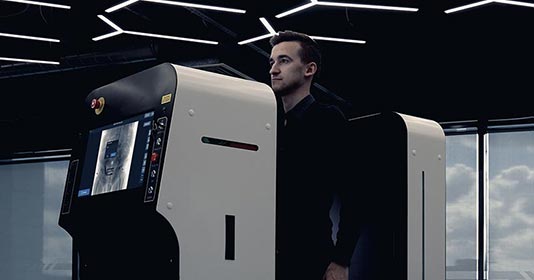
Systems built for high-footfall entrances are designed around keeping the queue moving. LV STREAM, for example, combines dual-view X-ray imaging with A-EYE automatic threat detection and is rated at up to 1,400 bags per hour. Operators act on the bags the system flags rather than judging every image unaided, which keeps results consistent across lanes and shifts and makes the process easier to describe in the compliance document.
Documenting screening for the SIA
The section 7 document should show the reasoning behind screening, not just the equipment: the expected peak and how it was estimated, the method chosen for each gate and why it is reasonably practicable, lane numbers and throughput assumptions, the bag policy, the escalation route and staffing. Recording queue times and throughput at each edition turns that reasoning into evidence for the next one. Screening layouts are sensitive and should be protected under the information security measure in section 6(3)(d).
FAQ about Martyn’s Law at events
An event qualifies if it is held at a building, land or both, is open to the public, checks a condition of entry such as a ticket, pass or payment, and can reasonably expect 800 or more people, including staff, at the same time at some point. It must not be held at enhanced tier premises or at premises excluded by the Act.
Yes. For events, premises include land without any building, so a festival field, park or closed public space can host a qualifying event, provided it has a defined perimeter with entry checks.
A free event can qualify if attendees must show a ticket, wristband or QR code to enter and 800 or more people are expected at once. A suggested donation or dress code is not a condition of entry.
No. It is met if 800 or more people can reasonably be expected at the same time at any point, such as during an evening headline set.
No specific method is mandatory. The Act requires appropriate measures on the movement of people into the event and the physical security of the site, so far as reasonably practicable. Entry screening is a common way to meet them, and the choice should be assessed and documented.
Divide the expected peak-hour bag volume by a tested, sustained throughput per lane, then add spare capacity for breakdowns, secondary searches and staff rotation.
X-ray baggage scanners fall under the Ionising Radiations Regulations 2017, enforced by HSE, which place duties on the employer whose staff operate them. The equipment safety standard for cabinet X-ray systems is IEC 61010-2-091.
The Act received Royal Assent on 3 April 2025, but the duties are not yet in force. Commencement is expected in spring 2027, with the exact date to be confirmed by government.
Sources
- LINEV Systems UK. “Martyn’s Law and the Reality of Venue Bag Screening”.
- UK Parliament. “Terrorism (Protection of Premises) Act 2025”.
- Home Office. “Terrorism (Protection of Premises) Act 2025: Scope (events)”.
- Home Office. “Martyn’s Law Factsheet”.
- UK Parliament. “The Ionising Radiations Regulations 2017”.
- Health and Safety Executive. “Ionising radiation”.