

Main website:
Other company websites:
Choose website




Shopping Centre and Retail Destination Security: Managing Public Safety Without Damaging Footfall


Shopping Centre and Retail Destination Security: Managing Public Safety Without Damaging Footfall
Shopping centres need security measures that protect visitors without disrupting the open movement retail depends on. Flexible, high-throughput bag screening can support public safety while preserving footfall.
Shopping Centre and Retail Destination Security: Managing Public Safety Without Damaging Footfall
FOCUS: Retail security and public safety in high-footfall destinations
APPLICATION: Shopping centres, retail destinations, seasonal events and shared public spaces
SOLUTION: LV STREAM flexible high-throughput bag screening
CONTACT: ukinfo@linevsystems.com
Introduction
Shopping centre security is not only about protecting commercial environments. Shopping centres and retail destinations are also public gathering places. They bring together shoppers, families, staff, delivery teams, event visitors and people passing through shared spaces. In periods of heightened security concern, retail operators may need to strengthen protective measures while preserving the open movement that makes retail work.
The challenge is clear: protect people without damaging footfall.
Why Retail Security Is Different
Unlike a stadium or a ticketed venue, a shopping centre often has multiple entrances, mixed tenant responsibilities, long opening hours and constantly changing visitor patterns. Screening every person at every entrance may not be practical or proportionate. However, risk-based screening may be required during seasonal peaks, high-profile events, public alerts, celebrity appearances, late-night openings or specific threat assessments.
Retail security therefore needs flexibility. The aim is not to make every entrance feel like a barrier. The aim is to create a scalable capability that can be activated when and where it is needed.
When screening is activated at selected entrances only, the plan also needs to account for displacement: visitors who prefer not to be screened may simply use another door. Temporarily closing or staffing other entrances, signposting the screening point clearly and explaining the reason for temporary measures help keep the approach effective without frustrating regular shoppers.
The Role of Bag Screening in Retail Public Spaces
Bag X-ray scanners can support retail security in several ways. It can help enforce prohibited items policies during events, protect crowded indoor spaces, support security around high-profile areas and reduce uncertainty for staff when suspicious items are reported. It can also work alongside CCTV, security patrols, access control, tenant communication and incident response plans.
For shopping centres, the screening process must be fast and clear. If it creates long waiting times, visitors may avoid the entrance, move to a different access point or leave altogether. That is why throughput and visitor flow are commercial as well as security considerations.
LV STREAM as a Flexible Screening Point
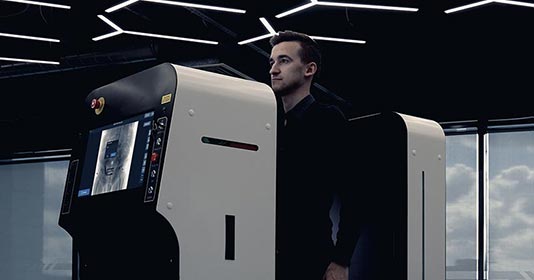
LV STREAM offers a practical model for shopping centres and retail destinations because it supports high-throughput bag screening with automatic A-EYE-powered threat detection. Bags move continuously through the scanner, and staff are alerted when a potential threat requires attention. This reduces dependence on slow manual checks and helps security teams focus on response, visitor communication and movement management.
The system can be used at selected entrances, temporary screening zones, event areas or higher-risk locations within a retail destination. Its value lies in flexibility: it can support a policy-led approach rather than a one-size-fits-all security model.
Events Inside the Centre
Seasonal markets, product launches, live performances and celebrity appearances can briefly change the risk profile of a retail destination. Where the centre is already enhanced tier premises, these activities fall under the centre’s own duties. Where the centre is standard tier, a ticketed or pass-controlled event expecting 800 or more people at the same time may be a qualifying event in its own right, or may draw the centre into the enhanced tier, and enhanced duties then apply while that crowd is present. Our guide to Martyn’s Law qualifying events explains the test in more detail. Planning screening for these events in advance, rather than on the day, is where a deployable screening point is most useful.Preparing for Martyn’s Law Without Overcomplicating Operations
Martyn’s Law, formally the Terrorism (Protection of Premises) Act 2025, will place legal duties on those responsible for qualifying premises, and shops and shopping centres fall within the uses listed in Schedule 1 to the Act. The duties are not yet in force: commencement is expected in spring 2027, with the exact date still to be confirmed.
What a shopping centre must do depends on how many people can reasonably be expected to be present at the same time. Standard tier premises (200 to 799 people) must have public protection procedures covering evacuation, invacuation, lockdown and communication. Enhanced tier premises (800 or more) must also put in place public protection measures, including measures on monitoring, the movement of people and physical security, and document them for the Security Industry Authority (SIA). Because shopping centres have no ticketed entry, that figure is an assessment rather than a count, and the test looks at how many people may be present from time to time, so trading peaks such as December weekends are relevant, not just an average day. Home Office guidance allows familiar methods such as fire safety occupancy calculations and historic footfall data to be used.
In a multi-tenant centre, the responsible person is the organisation in control of the premises for their main use, which is usually the centre’s owner or managing agent rather than individual retailers. The Act also includes duties to co-ordinate and co-operate, so evacuation, lockdown and communication arrangements need to be agreed with tenants rather than planned in isolation.
Bag screening technology should not be presented as a shortcut to compliance, and neither the Home Office nor the SIA endorses third-party products for that purpose. It should be part of a wider plan. LV STREAM supports that plan by giving security teams a faster and more consistent way to inspect bags and carried items when screening is needed.
Commercial Benefits of Smoother Screening
Retail destinations depend on easy movement. People come to shop, eat, meet friends and attend seasonal events. A slow or confusing security process can affect the whole customer journey. By contrast, a faster and more predictable screening process helps visitors enter confidently and spend more time inside the destination.
The same principle applies across public venues: when visitors spend less time waiting outside, they have more time to engage with the venue. In a retail environment, that has direct commercial relevance.
Conclusion
Shopping centre security must protect people while respecting the commercial need for open, easy movement. As public protection expectations evolve, retail destinations need screening options that are scalable, proportionate and operationally realistic.
LV STREAM supports this requirement by combining high-throughput bag screening, A-EYE-powered threat detection and flexible deployment for busy public entrances. It helps retail security teams strengthen protection without turning footfall into a bottleneck.
FAQ about Martyn’s Law at the Shopping Centre
Yes. Shops and shopping centres are among the uses listed in Schedule 1 to the Act. Premises are in scope where 200 or more people can reasonably be expected to be present at the same time from time to time, and enhanced duties apply from 800. The duties are expected to come into force in spring 2027.
Generally, the organisation in control of the premises for their main use, usually the owner or managing agent of the centre. Procedures still need to be co-ordinated with tenants, particularly for evacuation, lockdown and communication.
No specific method is required. Enhanced tier premises must put in place appropriate public protection measures so far as reasonably practicable, and bag screening is one option, often used selectively during peaks, events or periods of heightened threat.
By activating screening where and when the risk justifies it, using high-throughput screening at those points, signposting clearly, communicating prohibited items in advance and managing other entrances so visitors are not simply displaced.
Through a reasonable assessment of how many people may be present at the same time, using methods such as fire safety occupancy calculations and historic footfall data, with peak trading periods taken into account.