

Main website:
Other company websites:
Choose website





Comprehensive Goods and Container Inspection: Advanced X-Ray Solutions for High-Volume Freight


17 June 2026
Comprehensive Goods and Container Inspection: Advanced X-Ray Solutions for High-Volume Freight
As UK ports handle growing freight volumes, high-throughput non-intrusive inspection is becoming essential. This article looks at how MEAP supports faster, smarter cargo and vehicle screening with multi-energy X-ray imaging and AI.
UK seaports handle more than 420 million tonnes of freight annually, with Felixstowe, Southampton, and London Gateway accounting for a significant share of containerised cargo. That throughput is not simply a measure of trade activity — it defines the operational environment in which Border Force, customs authorities, and port security teams must identify potential threats without disrupting the movement of legitimate goods.
This balancing act is becoming increasingly important. One of Border Force’s strategic objectives is to expand the use of non-intrusive inspection methods, increasing the proportion of freight that can be examined while maintaining efficient border operations. As cargo volumes continue to grow, screening technology is expected to deliver both higher detection capability and uninterrupted traffic flow.
The challenge extends beyond any single threat category. Concealed contraband, undeclared goods, and clandestine entry attempts all require the ability to inspect densely packed vehicles and containers quickly and consistently. Manual examination remains an important enforcement tool, but it cannot provide the throughput necessary for modern UK ports operating around the clock.
For port operators and government agencies alike, the question is no longer whether advanced screening is required. It is whether existing inspection infrastructure can meet the speed, accuracy, and operational resilience that current and future freight volumes demand.
The Regulatory and Operational Framework
Freight inspection at UK ports operates within a clearly defined regulatory environment. Border Force applies a risk-based approach to selecting consignments for examination, but the technologies supporting those examinations must comply with specific legal and technical requirements.
Cargo X-ray security systems are expected to meet the Ionising Radiation Regulations 2017 (IRR17) and other applicable standards governing radiation safety and operational reliability. At the same time, inspection systems must support continuous operation and maintain the fluidity of busy freight corridors.
The Home Office’s UK Border Strategy and the National Statement of Expectation place increasing emphasis on resilient border infrastructure, while the Border Force Infrastructure Standards (BFIS) establish technical requirements for many port facilities. The Border Target Operating Model (BTOM) has further reinforced the importance of efficient risk-based inspection by introducing structured approaches to import controls and border processing.
Taken together, these developments signal a broader trend: rapid, non-intrusive inspection is becoming a fundamental component of UK border operations rather than a specialised capability.
Why High-Throughput Non-Intrusive Inspection Matters
The diversity of modern freight creates a significant operational challenge. A single vehicle or container may include consolidated cargo from multiple shippers, goods with widely varying densities, and packaging arrangements specifically designed to maximise transport efficiency.
These conditions can also create opportunities for concealment. Whether the concern is prohibited goods or clandestine entry through commercial vehicles, inspection teams must be able to identify anomalies hidden within complex cargo structures without creating bottlenecks at ports and border crossings.
This is where advanced heavy goods X-ray screening technologies provide a practical advantage. By combining deep penetration, material discrimination, and automated image analysis, modern non-intrusive inspection systems reduce reliance on time-consuming manual examinations while helping operators focus attention on genuinely suspicious consignments.
For UK ports, maintaining throughput is not simply a commercial objective. It is a requirement for keeping supply chains moving while supporting national border security.
The Multi-Energy X-ray Array Portal Platform
The Multi-Energy X-ray Array Portal (MEAP) platform from LINEV Systems has been developed to address these operational requirements through a single scalable technology family.
Rather than treating imaging, threat analysis, and workflow management as separate processes, the platform combines synchronized Multi-Energy Array technology, Dual-View imaging, proprietary software, and embedded artificial intelligence within a unified inspection architecture.
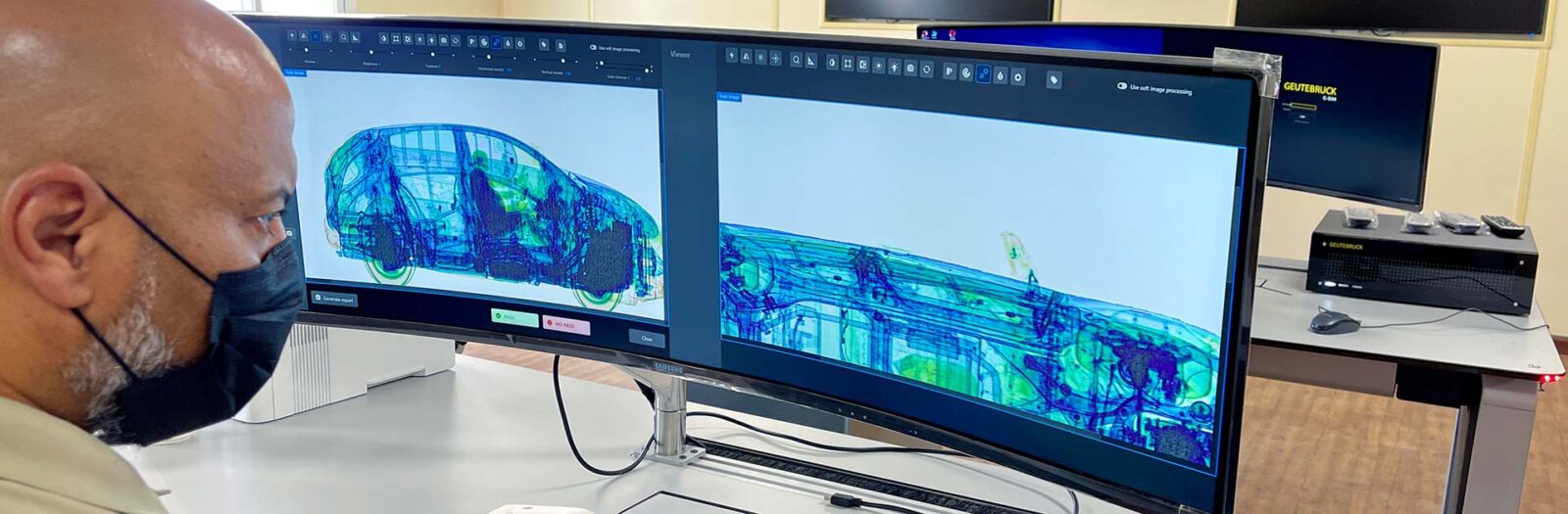
High- and low-energy X-ray sources operate simultaneously to generate contrast-rich images across a broad range of cargo densities, while Dual-View geometry captures multiple perspectives in a single pass. The integrated AI engine assists with threat recognition, material classification, and operator decision-making, reducing inspection times and helping minimise false alarms.
The modular design of the platform allows organisations to adapt system capability to changing operational requirements. Installations can be expanded, upgraded, and integrated into existing security infrastructures without requiring complete replacement of the original investment.
This common architecture forms the foundation for three specialised configurations designed for different operational environments.MEAP: High-Throughput Cargo and Vehicle Screening
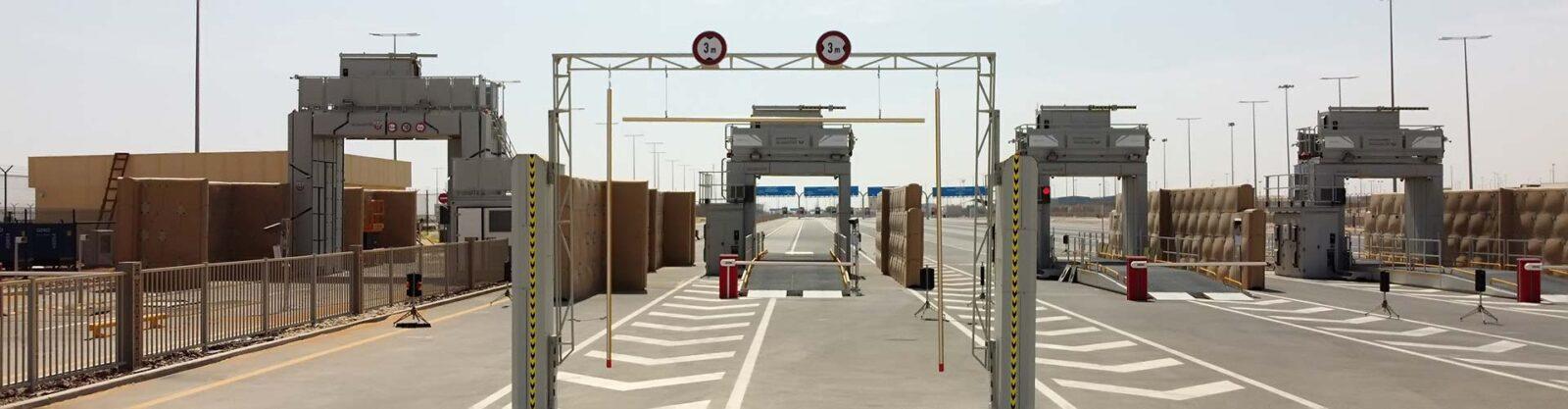
The standard MEAP configuration is designed for high-volume freight operations where throughput and detection accuracy must operate together.
The system supports heavy goods X-ray screening across a wide range of vehicle classes while maintaining the flexibility required for busy ports and border crossings. Multi-energy imaging and AI-assisted analysis improve the identification of organic, inorganic, and metallic materials, helping operators assess complex cargo loads more efficiently.
For container terminals handling mixed and consolidated shipments, MEAP functions as a consolidated goods X-ray scanner capable of resolving layered cargo structures that would be difficult to interpret using conventional single-energy systems. Automated colour-coded material classification further reduces operator workload during high-volume screening operations.
The platform’s modular architecture also allows phased deployment, enabling organisations to expand from a compact configuration to a full Dual-View multi-energy portal as inspection demands evolve.
MEAP Spectral: Advanced Material Recognition
For environments requiring the highest level of detection performance, MEAP Spectral extends the core platform through the addition of 3D Spectral Tomography.
The system combines high- and low-energy projections to generate spectral contrast views, enabling highly accurate differentiation between plastics, metals, organics, and other materials. This capability supports a container screening system with inorganic material discrimination suitable for customs authorities and border agencies dealing with complex cargo profiles.
A key advantage of MEAP Spectral is that AI processing begins with raw scan data before image rendering. Automated threat classification starts immediately, reducing decision times and supporting more consistent inspection outcomes across high-throughput operations.
Three-dimensional reconstruction provides additional confidence when analysing dense or multi-layer cargo, allowing both operators and AI algorithms to evaluate structures from multiple perspectives.
Existing MEAP installations can be upgraded through field integration of the spectral tomography module, allowing organisations to expand capability while protecting previous investments.
MEAP 320DVB: Occupied Vehicle and Mixed Traffic Inspection
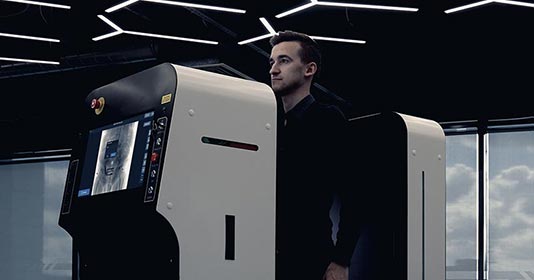
The MEAP 320DVB is designed for one of the most operationally demanding border security tasks: the inspection of occupied buses, coaches, vans, and passenger vehicles without requiring passengers to disembark.
This capability is particularly relevant for ports and checkpoints handling mixed traffic, where security procedures must be balanced against passenger convenience and operational throughput.
As part of the wider Multi-Energy X-ray Array Portal family, the MEAP 320DVB combines dual-energy imaging, AI-assisted analysis, and Dual-View scanning to detect concealed threats while maintaining efficient vehicle flow.
The system also supports light goods vehicle monitors requirements by accommodating vans and smaller commercial vehicles within the same inspection environment, reducing the need for multiple dedicated screening systems.
Integrated options such as ANPR, under-vehicle inspection, radiation portal monitoring, container code recognition, and ID document readers allow the platform to operate as part of a broader border security ecosystem.
Integration and Long-Term Operational Value
Technology performance is only one part of a successful deployment. For many port operators and government agencies, long-term operational value depends on how easily new systems integrate with existing infrastructure and adapt to changing requirements.
LINEV Systems develops its own software environment for image processing, scan management, and operational workflows, providing a unified platform for inspection activities and future capability expansion.
The MEAP family is designed for interoperability with established checkpoint technologies, helping organisations integrate new screening capabilities without disrupting existing operations. The modular architecture also supports field upgrades, simplifies maintenance procedures, and helps reduce lifecycle costs.
Personnel readiness is equally important. Training programmes for operators, technical specialists, and maintenance teams support consistent inspection quality and help organisations shorten the transition period when introducing new technologies.
This combination of proprietary software, embedded AI, system interoperability, and operational training enables the platform to evolve alongside regulatory changes and emerging security challenges.
Operational Considerations for UK Port Deployments
Selecting the appropriate configuration depends on the operational profile of the port or border crossing.
Container terminals managing large volumes of consolidated freight may benefit from the enhanced material discrimination available through MEAP or MEAP Spectral. Locations with significant passenger and ro-ro traffic may require the occupied vehicle inspection capabilities of the MEAP 320DVB.
Throughput objectives, available infrastructure, staffing resources, and long-term expansion plans should all form part of the evaluation process. AI-assisted automation can reduce operator workload, while the common software environment supports standardised workflows and centralised management of inspection records.
The platform’s modular design and compatibility with existing security systems also simplify integration into established UK port facilities, helping organisations modernise screening capabilities without extensive infrastructure replacement.
Summary
UK ports face the combined challenge of increasing freight volumes, evolving regulatory expectations, and the need to maintain efficient border operations.
Meeting those demands requires inspection technologies capable of delivering high-throughput, non-intrusive screening without compromising detection performance.
The Multi-Energy X-ray Array Portal platform addresses these requirements through a unified technology family that combines Multi-Energy Array imaging, Dual-View geometry, artificial intelligence, and modular architecture. Within that platform, MEAP supports high-volume cargo screening, MEAP Spectral provides advanced material recognition and 3D tomography, and the MEAP 320DVB enables efficient inspection of occupied vehicles and mixed traffic environments.
Supported by proprietary software, integration capabilities, and personnel training programmes, the platform offers UK port operators and border authorities a scalable approach to strengthening inspection capability while protecting long-term operational investments.