

Main website:
Other company websites:
Choose website


Customs & Border
The pressure on UK border infrastructure has intensified considerably in recent years. The combination of post-Brexit customs arrangements, rising cross-Channel freight volumes, and increasingly sophisticated concealment methods used by organised criminal networks has placed new demands on Border Force and partner agencies operating at major points of entry — from Dover and Folkestone to Holyhead, Harwich, and beyond.
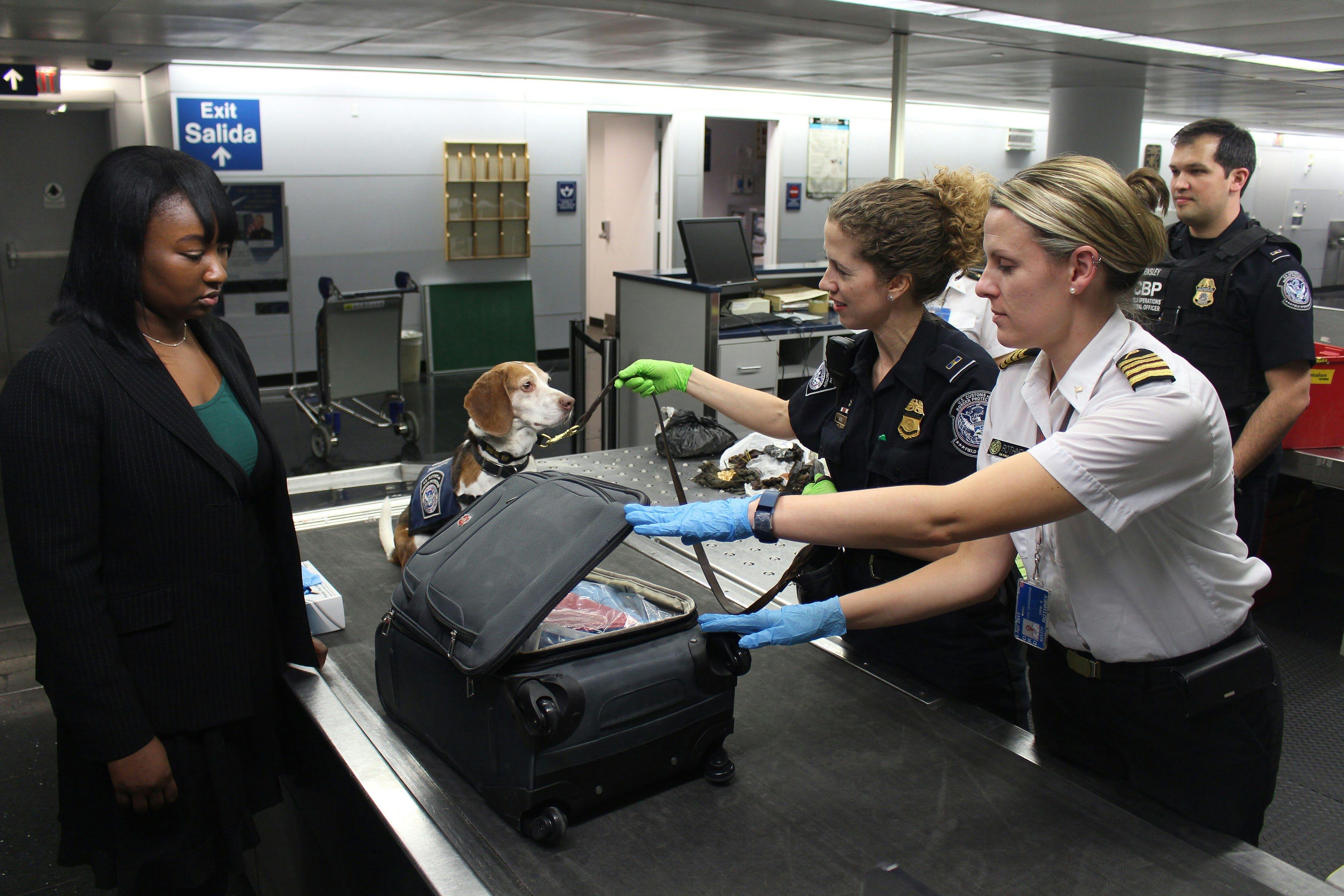
At land border crossings, ferry terminals, and ro-ro freight facilities, the volume of vehicles requiring inspection continues to grow whilst the expectation of minimal disruption to legitimate trade remains unchanged. Manual inspection regimes — where vehicles are stopped, occupants asked to disembark, and loads physically searched — cannot scale to meet this demand without creating the kind of congestion that has significant economic consequences for hauliers, logistics operators, and the wider supply chain.
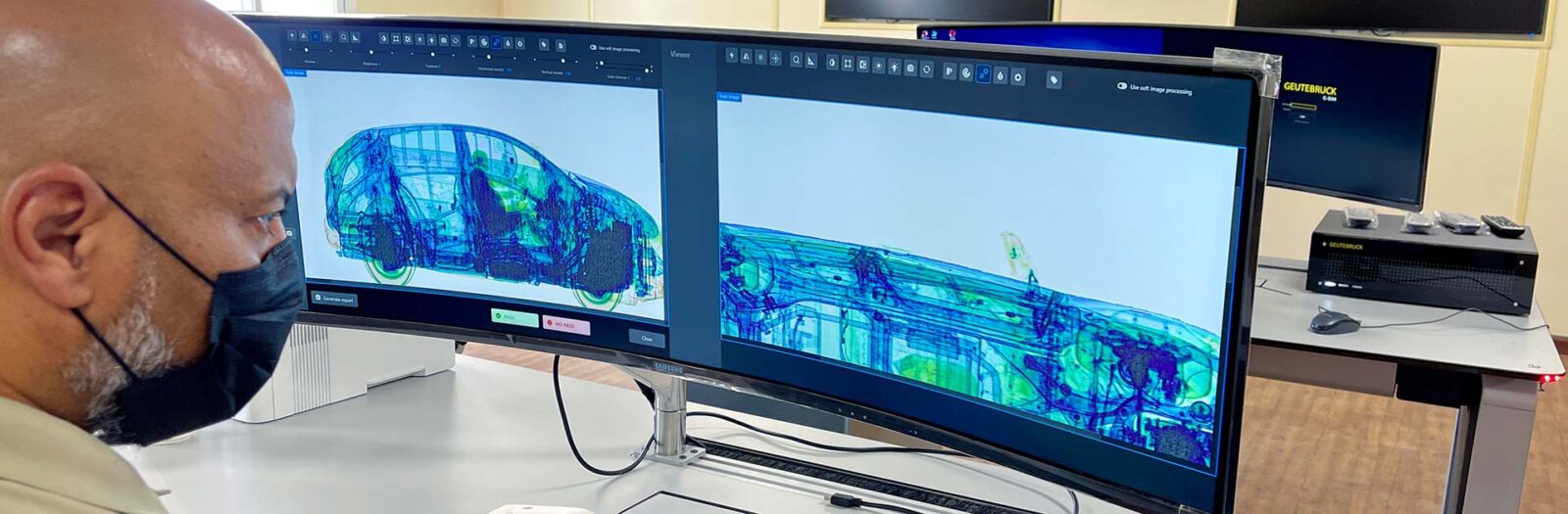
Non-intrusive customs vehicle screening technology addresses this directly. Drive-through X-ray inspection allows Border Force officers and customs authorities to scan vehicles and cargo in motion, identify threats and anomalies automatically, and make targeted decisions about which vehicles require further examination — without stopping the flow of traffic that presents no elevated risk.
What Customs X-Ray Scanners Detect
Border crossing X-ray machines used in drive-through configurations are capable of identifying a broad range of concealed threats and prohibited goods. High-energy X-ray imaging penetrates the bodywork, cargo load, and structural components of vehicles, producing detailed images of their internal contents without requiring physical access.
At UK border checkpoints and port facilities, customs scanning machines are routinely deployed to detect:
Controlled drugs — including compressed packages concealed within structural cavities, fuel tanks, or hidden within legitimate cargo loads. Dual-energy and multi-energy imaging distinguishes organic material from surrounding metal and inorganic matter, making even well-concealed narcotics identifiable.
Weapons and firearms — metallic signatures are clearly visible in X-ray projections, and automated material classification further assists in isolating dense metallic objects within mixed cargo.
Explosives and explosive components — spectral analysis and AI-driven threat classification help identify materials with characteristics consistent with explosive substances, including precursors that may be transported in component form.
Undeclared goods and fiscal fraud — border X-ray scanners provide customs officers with a clear view of cargo load composition, enabling rapid identification of discrepancies between declared manifests and actual vehicle contents.
Human trafficking and clandestine entrants — AI-assisted detection algorithms can identify the presence of people concealed within cargo spaces, vehicle voids, or container loads, supporting Border Force’s obligations under UK immigration and modern slavery legislation.
Customs Vehicle Screening Technology: How It Works
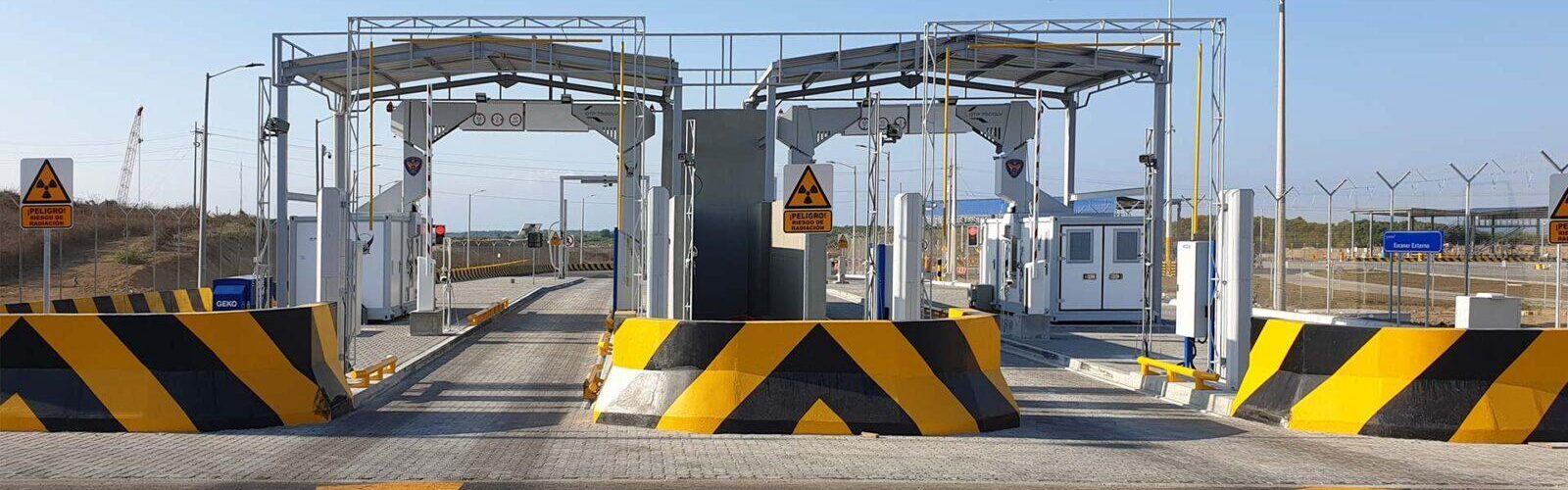
Modern port and border security X-ray systems operate on the principle of non-intrusive inspection — the vehicle drives through the scanning portal at low speed, typically between 5 and 15 km/h, whilst X-ray sources project energy through the vehicle from multiple angles. Detector arrays capture the resulting image data, which is processed in real time and presented to an operator on an imaging workstation.
The most advanced border control X-ray scanners now integrate multiple technology layers to maximise both detection capability and operational throughput:
Multi-Energy Array (MEA) technology uses synchronised high- and low-energy X-ray sources operating simultaneously. High energy provides deep penetration through dense cargo — including steel-sided containers and heavy freight — whilst low energy delivers surface contrast and material detail. The combination eliminates the imaging compromises inherent in single-energy systems.
Dual-View geometry captures simultaneous projections from the side and from above, eliminating the angular blind spots that single-projection systems cannot resolve. When cargo is screened from one angle only, objects concealed behind dense material may remain invisible. A second projection from a perpendicular axis removes this vulnerability.
Real-time AI analysis processes the fused, multi-energy, multi-angle data stream before the operator reviews the image. Threat classification, material identification, and anomaly flagging occur automatically, providing operators with structured findings rather than a raw projection to interpret manually. This reduces operator fatigue, improves consistency across long shifts, and accelerates the decision-making process for each vehicle.
3D Spectral Tomography, available in the most advanced configurations, reconstructs a volumetric model of the vehicle interior from multiple projections. Combined with spectral material analysis — which identifies substances by their characteristic X-ray absorption signatures across a range of energy levels — this capability provides unmatched material discrimination, making it possible to distinguish between closely related substances such as different drug types, explosives, and benign organic materials.
Border Patrol Checkpoint Scanners: Operational Configurations
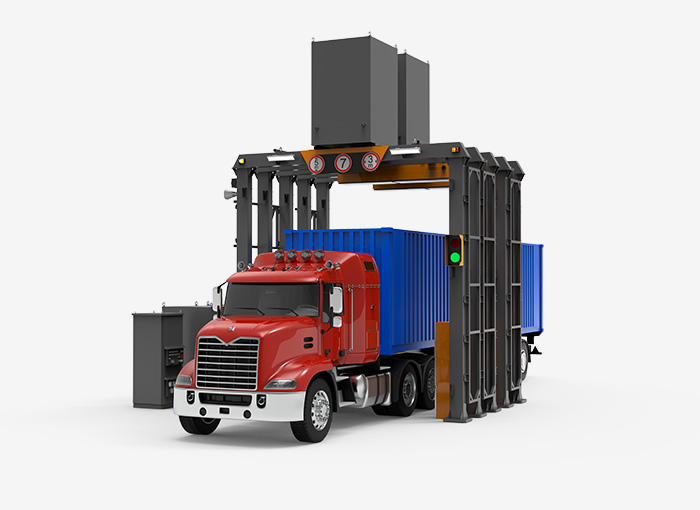

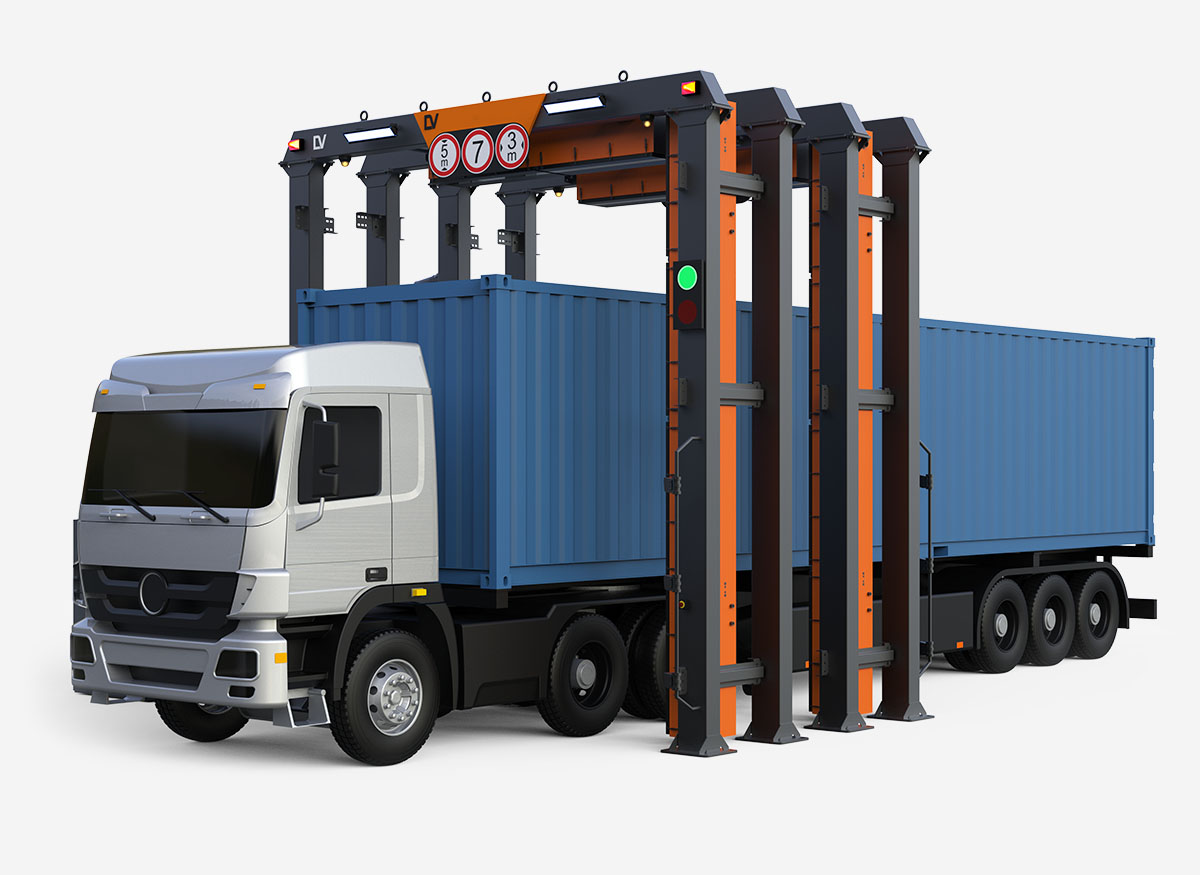
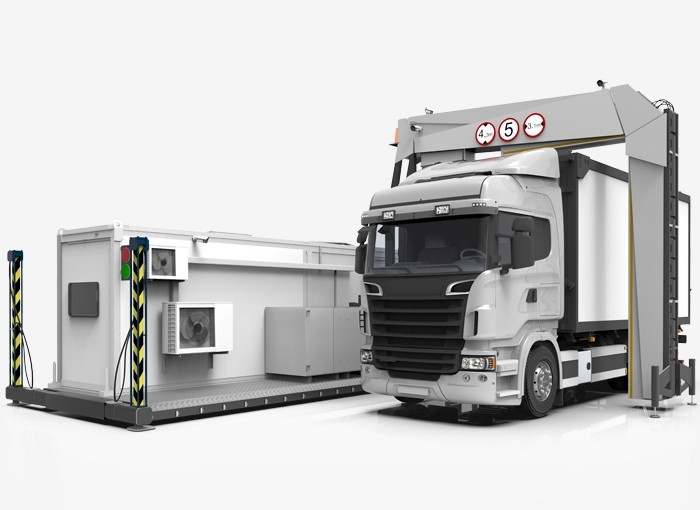
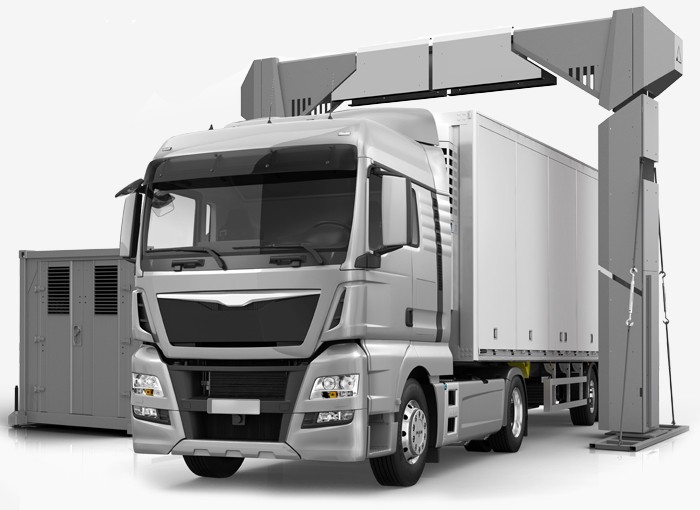
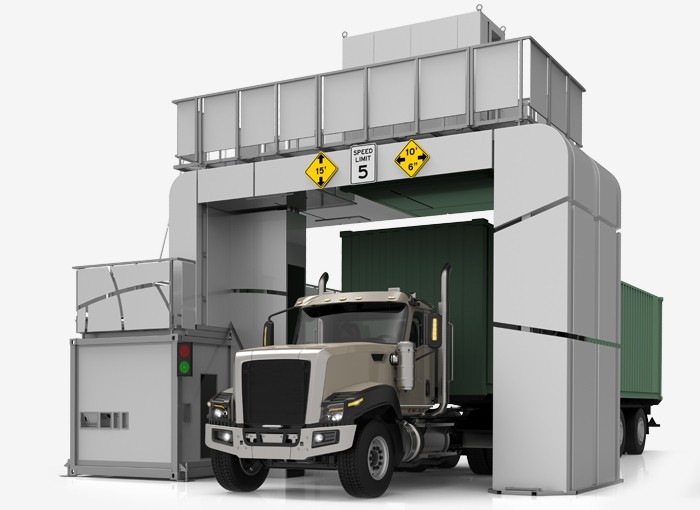
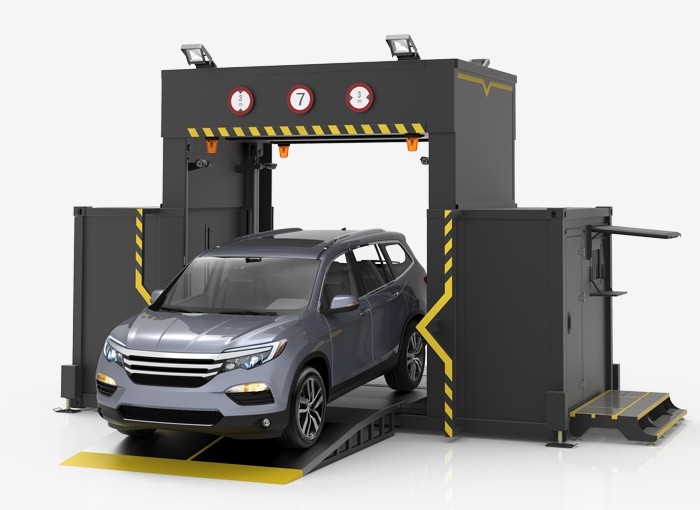
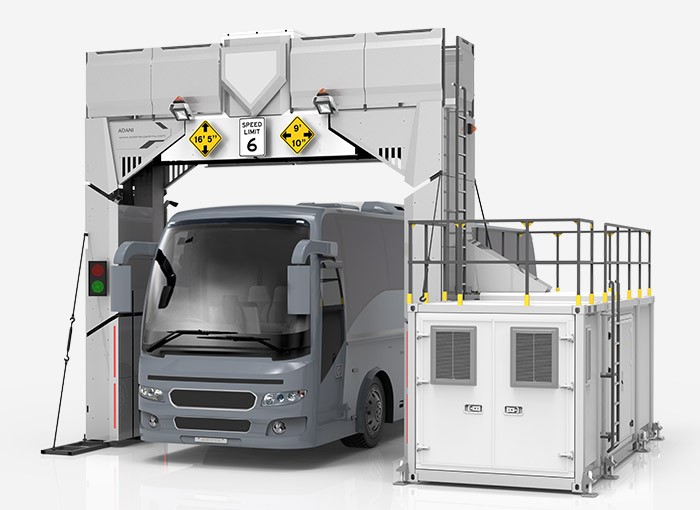
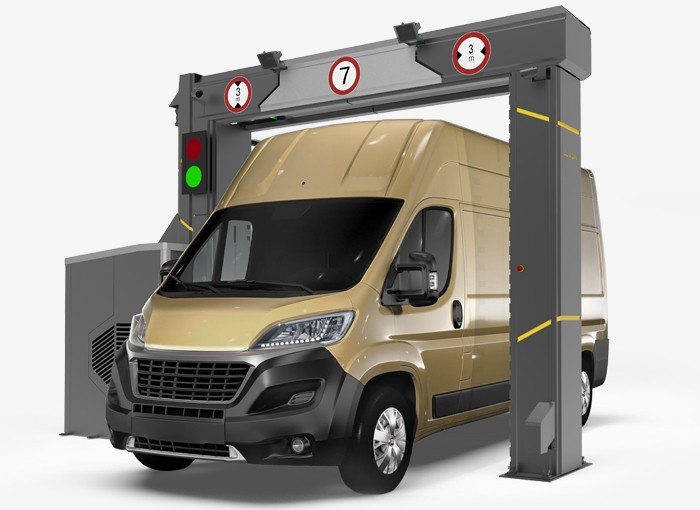













Different border environments present different operational constraints. A high-volume ro-ro terminal at Dover processes thousands of HGVs per day and requires a fixed, high-throughput solution capable of maintaining pace with freight traffic. A remote land border crossing or a temporary checkpoint established in response to an intelligence assessment requires something entirely different — a rapidly deployable, self-contained system that can be operational within hours.
LINEV Systems’ range of border patrol checkpoint scanners is designed to address this range of requirements within a coherent product family.
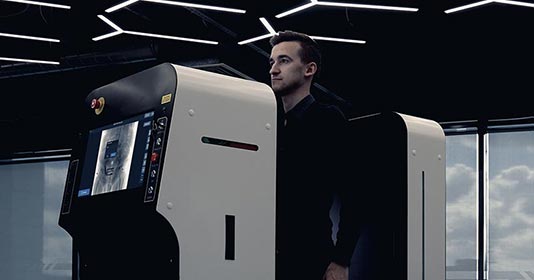
MEAP — Multi-Energy X-Ray Array Portal is the flagship platform for high-throughput fixed and stationary installations. It combines MEA technology, dual-view geometry, and real-time AI analysis in a modular architecture that scales from a compact single-source configuration to a full dual-view, multi-energy portal. MEAP supports drive-through inspection of all vehicle types — from passenger cars and vans to fully loaded HGVs and freight containers — at throughput rates of up to 150 vehicles per hour. Its modular design allows deployment within existing checkpoint infrastructure and supports field upgrades as operational requirements evolve.
MEAP Spectral extends the MEAP platform with 3D Spectral Tomography, adding volumetric image reconstruction and ultra-high-resolution material discrimination to the core dual-view, multi-energy scanning capability. For agencies requiring the highest possible detection confidence — at major ports, high-risk crossing points, or facilities handling sensitive freight — MEAP Spectral represents the current state of the art in non-intrusive customs scanning machine technology. The system processes raw spectral data through its AI engine before image rendering, enabling threat classification to begin at the point of scan rather than at the point of review.
MEAP 320DVB addresses the specific operational challenge of screening occupied passenger vehicles — particularly coaches and buses — at border checkpoints. The system performs dual-view drive-through inspection at speeds up to 15 km/h whilst passengers remain seated inside the vehicle. Radiation output is calibrated to remain within approved safety limits for occupied vehicle scanning, allowing throughput rates of up to 120 vehicles per hour without requiring disembarkation. At busy coach crossing points — Channel Tunnel terminals, major ferry ports — this capability is operationally essential.
For environments requiring rapid deployment, the DTP 7500LVR combines high-throughput cargo and vehicle screening capability with a hydraulic relocation system that enables a complete checkpoint to be operational within one hour of arrival on site. This is particularly relevant for UK Border Force operations at non-permanent or surge-capacity locations, where infrastructure cannot be assumed.
On-the-Spot Port and Border Scanning: Integration with Wider Security Systems
Effective customs and border vehicle inspection does not operate in isolation. Border crossing X-ray machines at UK ports and land crossings are typically deployed as part of an integrated checkpoint that may include several complementary capabilities.
Automatic Number Plate Recognition (ANPR) cross-references vehicle registrations against law enforcement and customs databases at the point of entry, enabling intelligence-led selection of vehicles for enhanced screening before they reach the X-ray portal. Radiation Portal Monitors (RPM) detect the presence of radioactive or nuclear material independently of X-ray imaging. Under Vehicle Inspection Systems (UVIS) capture images of the vehicle undercarriage — an area that presents specific concealment risks and is not covered by standard portal projections. Document readers and driver photograph capture systems support the identification of vehicle operators as part of the broader border control process.
LINEV Systems’ MEAP platform integrates with all of these subsystems through its Digital Management Suite, which provides API connectivity to external databases — including customs management platforms and national security networks — and enables centralised monitoring and diagnostics across multiple installed systems. For Border Force and HMRC operations managing screening infrastructure at several locations simultaneously, this centralised oversight capability has practical operational value.
Why UK Customs and Border Authorities Choose LINEV Systems
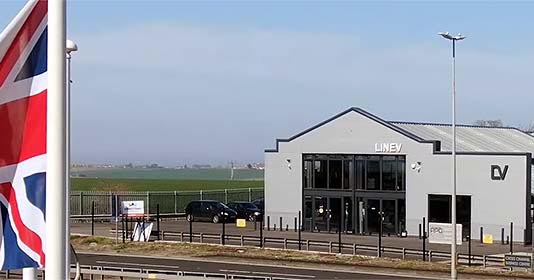
LINEV Systems operates from its UK facility in Ramsgate, Kent — a location that reflects both the company’s established relationship with the UK border security market and the geographic proximity to the highest-volume cross-Channel freight routes. The team provides technical support, maintenance, and service from within the UK, reducing response times and ensuring continuity of operation for systems deployed at critical border infrastructure.
LINEV Systems’ border X-ray scanner portfolio has been developed through direct engagement with border agencies and customs authorities, and the systems are designed to reflect the operational realities of UK customs practice — including the specific challenges of post-Brexit customs arrangements, mixed traffic at major crossing points, and the intelligence-led screening methodologies used by Border Force.
The MEAP platform’s modular architecture means that procurement decisions do not require a commitment to a single fixed capability. Agencies can deploy a production-ready screening platform and upgrade to spectral tomography or expanded dual-view configurations as operational data and budget permit — a staged approach that manages capital expenditure without sacrificing the option to reach the highest detection capability when it is needed.
For enquiries regarding customs x-ray scanners and border vehicle X-ray systems and portals for UK deployment, contact LINEV Systems UK directly.