

Main website:
Other company websites:
Choose website




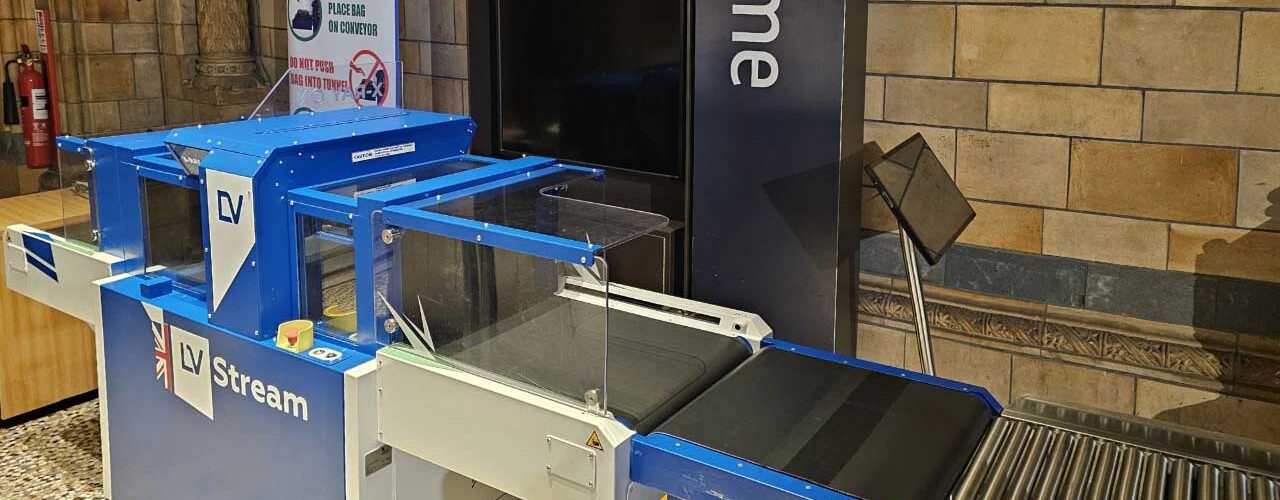
CASE STUDY: Security With LV STREAM | Natural History Museum
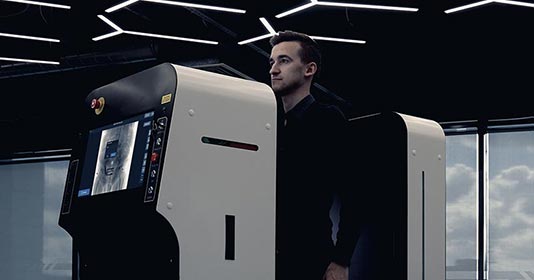
They selected the LV STREAM system for a trial, an AI-enabled X-ray screening solution designed to operate seamlessly at walking pace.
ENHANCING VISITOR FLOW AND SECURITY WITH LV STREAM
CLIENT: Natural History Museum
COUNTRY AND CITY: London, United Kingdom
DESCRIPTION: One of three major museums on Exhibition Road in South Kensington
INITIAL CHALLENGE
The Natural History Museum, one of the UK’s most visited cultural landmarks, faces significant challenges when it comes to managing high-footfall entry points while ensuring comprehensive security. During peak periods, up to 50 visitors per minute pass through the museum’s entrances, creating congestion and posing a risk to crowd safety. Traditional, labour-intensive security methods, such as manual screening, could not keep up with the volume of visitors, while excessive queuing introduced new vulnerabilities outside the venue. Additionally, airport-style screening methods were seen as operationally restrictive and financially unfeasible for a cultural institution.
High-footfall search and screening has emerged as one of the defining security challenges for major public venues. Balancing the protection of people, infrastructure, and collections against a spectrum of evolving threats remains a complex operational task. Excessive queuing can quickly introduce new vulnerabilities, effectively displacing risk outside the venue.
SELECTION PROCESS
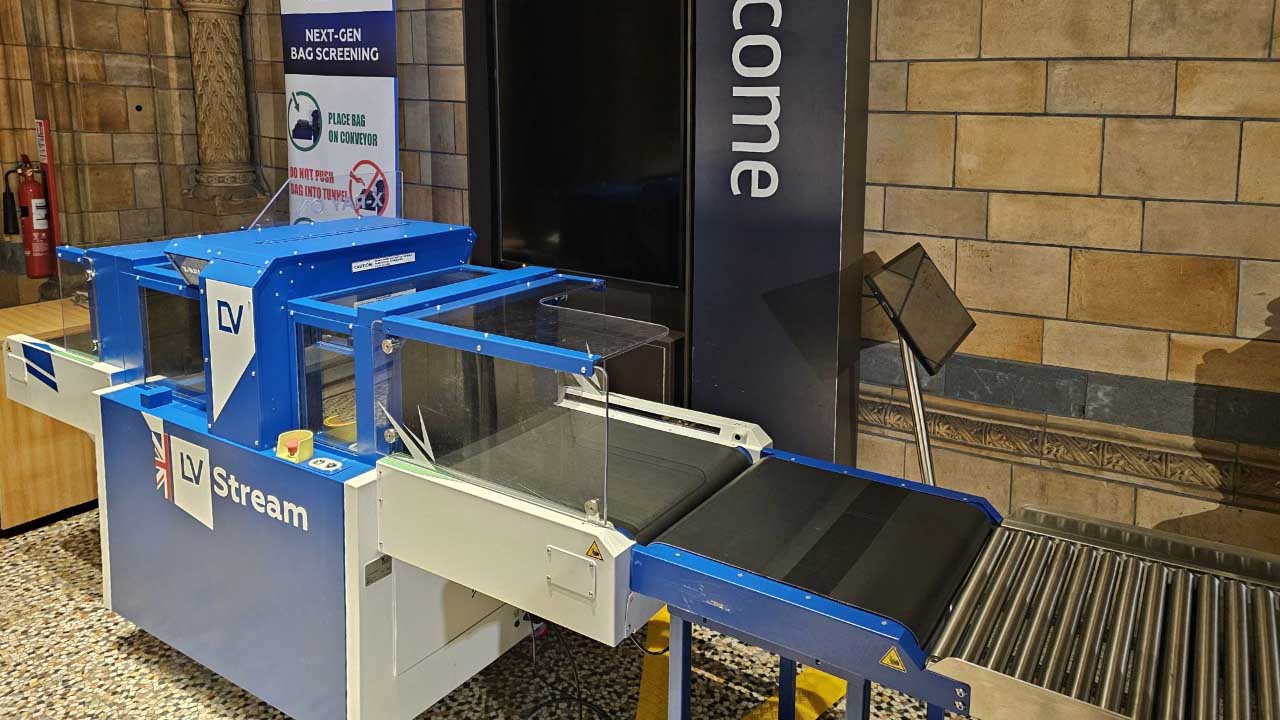
To address these challenges, the Natural History Museum explored various security solutions that could efficiently process large numbers of visitors without compromising the visitor experience. After researching several technologies, in April 2025 the museum selected the LV STREAM system for a trial. This AI-enabled X-ray screening solution was designed to operate seamlessly at walking pace, with the objective of achieving comprehensive bag screening while avoiding long queues or disruptive delays for visitors.
The introduction of the Linev Systems solution proved transformative. The system supported frontline staff by enhancing decision-making confidence and enabling a practical pathway to 100% bag screening.
IMPLEMENTATION
The trial of LV STREAM at the Natural History Museum demonstrated significant operational benefits. The system was straightforward for staff to use and integrate into existing processes, requiring minimal training to run effectively. It was deployed in high-footfall areas during peak visitor times, allowing real-time visitor screening without slowing down entry. The system’s flexibility allowed it to scale easily to match the varying flow of visitors during major events.
From an operational perspective, the system was straightforward for staff to use and integrate into existing processes, requiring minimal training to run effectively. Overall, the trial demonstrated how Linev can support high-volume venues in managing throughput while maintaining a positive visitor experience.
RESULTS & OUTCOME
During the trial, LV STREAM provided the museum with clear operational, experiential and strategic benefits. The system helped improve visitor flow at busy entry points, reduced queue congestion during peak periods, and supported security personnel with confident decision-making while maintaining a smooth arrival experience for visitors.
Immediate Benefits
- Improved Throughput and Queue Management: The system significantly reduced queue dwell times and alleviated congestion, improving visitor flow at busy entry points during peak periods.
- Enhanced Security: LV STREAM helped ensure 100% bag screening without compromising operational efficiency, supporting security personnel with confident decision-making.
- Visitor Experience: The system integrated seamlessly into the entry experience, with visitors noting a smoother and more reassuring arrival process, which is crucial in a heritage and cultural setting like the Natural History Museum.
During our trial of LV STREAM at the NHM, we found it helped improve visitor flow at busy entry points and reduced queue congestion during peak periods.
FUTURE OUTLOOK
Given the success of LV STREAM during the trial in improving operational efficiency and maintaining a positive visitor experience, the Natural History Museum is exploring further applications of the technology to enhance security and streamline operations.
ABOUT LINEV SYSTEMS
LINEV Systems UK is a leading provider of advanced X-ray security and scanning technology. With decades of expertise in developing cutting-edge solutions for high-footfall environments, the company provides AI-powered systems that improve security, efficiency, and the visitor experience.
LINEV Systems UK’s products are trusted by cultural institutions, museums, airports, and event venues worldwide, offering scalable, efficient solutions that help meet both security demands and operational goals.
To arrange a live demo or learn more, contact:
- LINEV Systems UK
- Email: ukinfo@linevsystems.com
- Website: linevsystems.uk